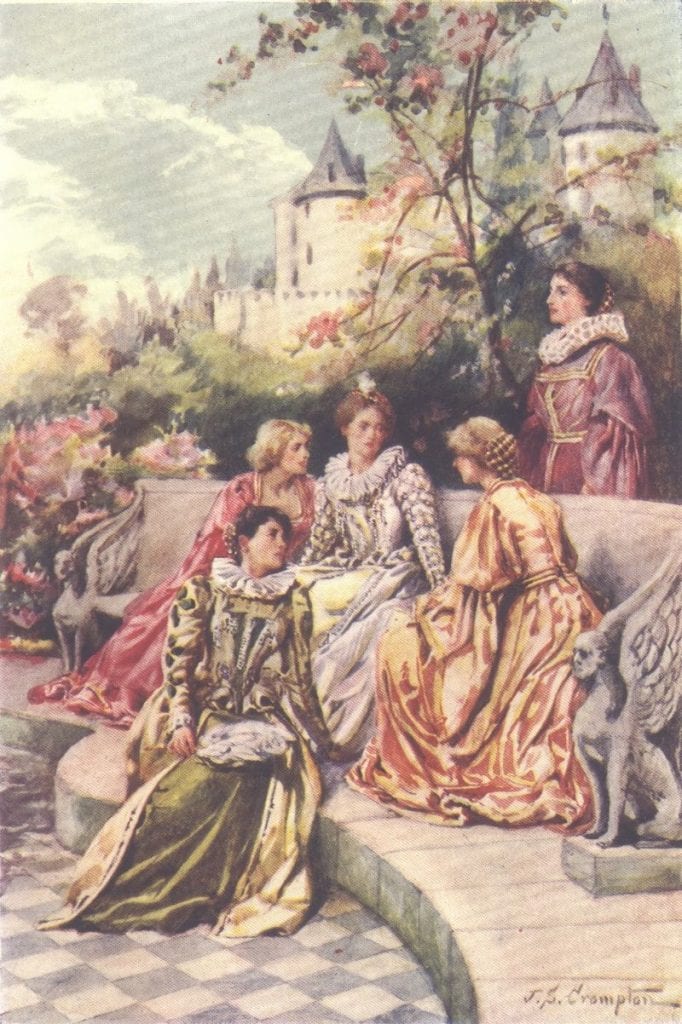
There is a nice poem that goes
“Mary, Mary, quite contrary..how does your garden grow?
With silver bells and cockel shells,
And pretty little maids, all in a row..” This poem is said to relative to Mary, Queen Of Scots, and her Ladies-In-Waiting, all named Mary. Mary Fleming, Mary Beaton, Mary Sheaton, and Mary Livingston or famously known as “The Four Maries”. These woman played a huge role in Queen Mary’s life (you can also enjoy the show Reign on Netflix. Complete with 4 seasons).
Mary Fleming
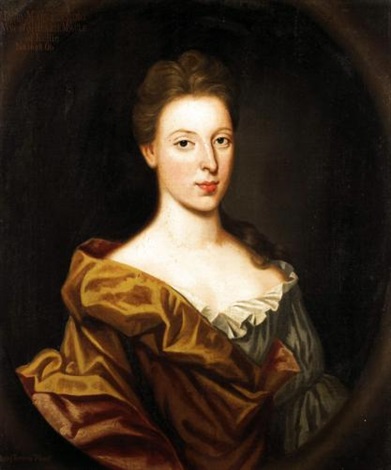
Mary Fleming was born in 1542 in Scotland, and the cousin of Mary Queen Of Scots. At the age of 5, Fleming and her mother accompanied Mary Queen of Scots when she went to France during Henry II’s reign. As she got older, she married a man named Sir William Maitland of Lethington; the Queen’s Secretary of State. Fleming was considered Mary’s closest friend and companion throughout the French Court and later, Mary’s turmoil. According to University of St. Andrews “Lady Lethington, she was now known, must have been tormented by the dramatic events that unfolded after she and her husband parted company from her cousin, the queen. As wife to Maitland, she now had dual loyalties, but she may have played a part in eventually persuading him to return to Mary’s side.” The quarrel between the Queen and Queen Elizabeth I had Fleming and her husband caught in the middle. Later in the years, Fleming’s husband died in 1573, and she never saw her cousin the Queen again after 1567.
Mary Beaton

Mary Beaton was also born in Scotland in the year 1543. She was highly recommened by the Queen’s Mother Mary De Guise to be her lady-in-waiting, as was her mother a lady-in-waiting to Mary De Guise. When she was 5 she traveled with the Queen to France to accompany her at court. As she got older, she was considered “pretty and plump” for she had golden hair and brown eyes, but was a looker onto older men. Beaton married in 1566 to Alexxander Ogilvy and had a son named James in 1568. History has it that Beaton interestingly had similar style handwriting as the Queen after her execution, really not knowing if that was hers or the Queen’s due to the fact that it may have been used to incriminate the Queen.
Mary Seton

Mary Seton was born in Scotland in the year 1541 and was also recommened by the Queen’s mother to go to the french court. She was known to be the Queen’s hairdresser. The Seton History stated “Yet, through confinement, disappointment, deprivation, sickness, discomfort, insult, and trouble, Mary Seton was always there“. While the Queen was imprisoned, Seton was there by her side for 15 years. She was the only one out of The Four Maries who chose not to marry. “It is nearly twenty years since I left Scotland, and in that time it has pleased God to take the best part of my relations, friends, and acquaintances; nevertheless, I presume there remain still some who knew me, and I shall be obliged by you remembering me to them as occasion may serve. I cannot conclude ” [now the real purpose of her letter declares itself] ” without adding still one word, that I am in extreme pain and distress at the news which has reached here of a fresh trouble which has fallen on the Queen my maistresse. Time does not permit me to write more. Written from Rheims with my humble recommendations, praying God, Monsieur de Courcelles, to make you more content than I now am, this 21st of October, your humble and obliged—MARIIE DE SETON.”
Mary Livingston
Mary Livingston was born also in 1541 in Scotland and was considered from the Queens Mother to be by her side until the very end. All four of the Mary’s were properly cared for and went take to lessons at Dominican Royal Priory of Saint Louis at Poissy. Here they learned the necessary skills of nobility, art, to be wives of nobelmane, and attendance to the Queen. In 1565, Livingston went on to marry a man named John Sempill, 4 months before the Queen’s 2nd marriage to Lord Darnley. Livingston was also responsible for the Queen’s robes and jewelery bestowed upon Mary’s Will if anything should happen to her. When the Queen was taken to England to be imprisoned in 1568, Livingston was to hold some of her jewels. Livingston’s husband died in 1579, and she died 4 years later in 1583.
I found the lives of these women were very interesting for each, but I also learned how loyal they were to their Queen. Their stories are unique in their own way. Also if you are interested in the Movie “Mary, Queen Of Scots” (2018), it is available on Amazon Prime, as well as other documentaries about the Queen.
References:
