Category: Queens

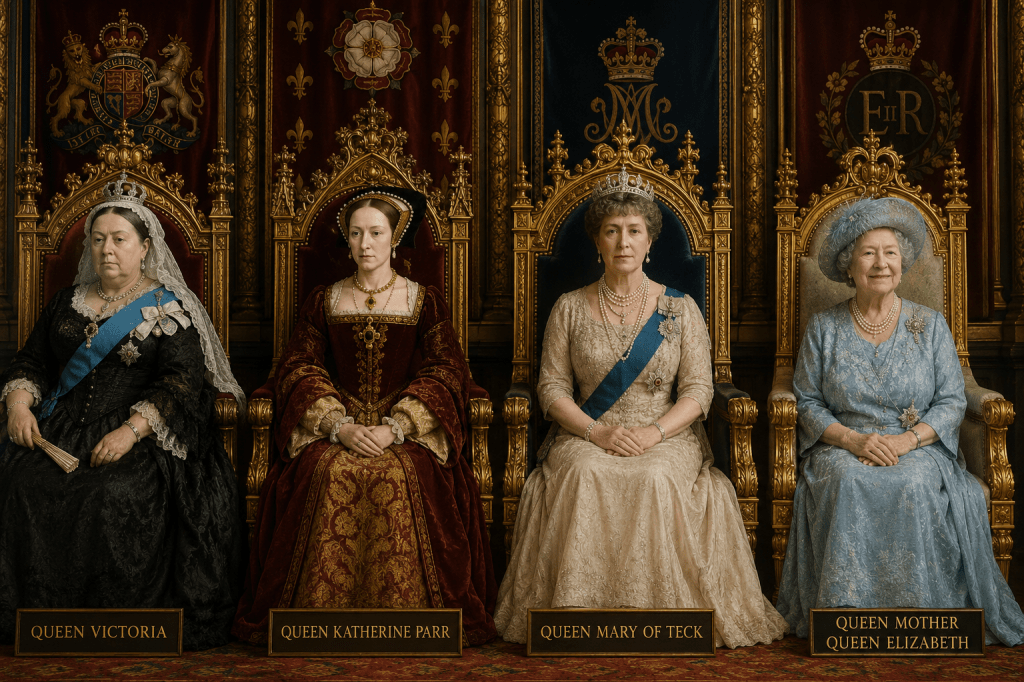
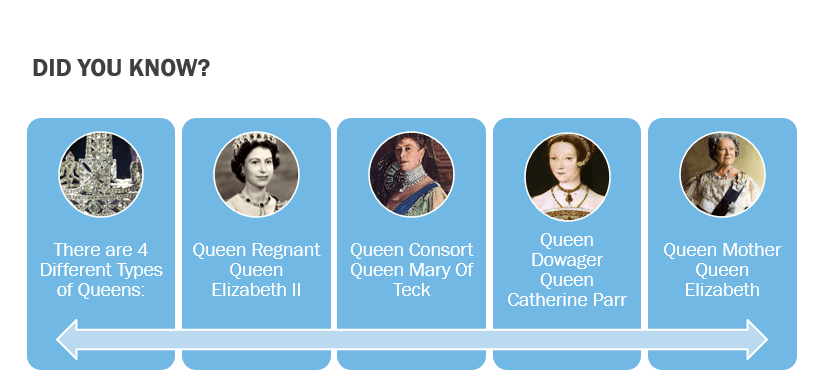
  • After doing research and understanding the roles and responsibilities behind a Queen, I’ve come to notice that she has separated roles solely based off of her title. So when it comes to their roles, I have found 4 different types of Queens: Queen Regnant, Queen Consort, Queen Mother, and Queen Dowager. There are some similarities but major differences. Let’s take a look into the dynamics of Queen titles and duties.

    A lot of historians can find this awareness rather “old news”. Others, may just be getting started in their historical journey to find out who is who, and I’m here to share it.
    Queen Regnant
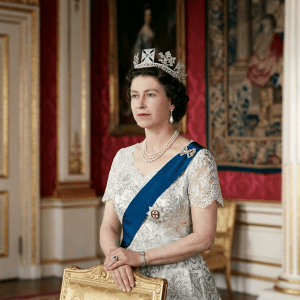
    Queen Elizabeth II wearing a jeweled crown, pearl necklace, blue sash, and white gown in an ornate room
    Queen Elizabeth II

    Let’s start off with whom I feel is the most prominent, carrying the most responsibilities of them all. The Head of State, The Heir, the Queen Regnant. From the picture above I have our most recent Queen, Queen Elizabeth II for example. A Queen Regnant is the one who is next in line or heir to the throne. For her story, Queen Elizabeth II was next in line to the throne after her father King George VI. Originally her uncle, King Edward VIII was set to be King, but did not make it to his Coronation due to marrying Wallis Simpson. Ms. Simpson a women that was twice divorced (which was a big no-no back then)! Since he had no children or heirs, Edward VIII served from January of 1936 and abdicated the throne in December of 1936. His brother George was next in line to be King and served from 1936 to 1952. King George VI died due to coronary thrombosis.

    From 1952 to 2022 is Queen Elizabeth II, serving and outstanding 70 years as Monarch, making her the longest serving monarch in history! Just like the Queen’s before her, such as Queen Victoria who served 63 years, and Queen Elizabeth I who served 42 years, Elizabeth II has it in her bloodline and within her right to carry the torch as Queen Regnant. The chances of a Queen to rule by bloodline does not come as often as a King. Ironically, it is a Queen who has reigned the longest.

    Duties & Responsibilities

    • DUTY: It is the duty of the Queen to represent and become an important symbol of her country during her reign. She must uphold the highest standards for services towards her community, give awards, and have an important role in philanthropy.
      Once a former King or Queen passes, instantly comes the servitude of the next Monarch by Coronation ceremony. It is the official initiation of a Queen with promises to serve their country, have their anointing, as well as abide by laws. Annually, the Queen attends the Opening of Parliament. This ceremony introduces a new year for the Sovereign, House of Lords, and the House of Commons. Another annual ceremonial service is the Trooping the Colour, or a parade for the Monarch. This display is gathered in front of thousands of their loyal subjects; with the Queen on her horse, supported with military troops, and ending off with an exciting fly over performance by the Air Force.
    • RESPONSIBILITY: As Queen Regnant, having the highest role, will come with responsibilities. Having this role takes on not only the crown, but a position that has been passed down from generation, to generation. Their duties are as “Head of State”. This level of hierarchy gives the opportunity for the monarch to advise, guide, and give encouragement to government. However, being the Head Of State, a Queen does not bow towards an opinion when it comes to government. Nor is she above the law. This decision was made long ago back in 1215: “The Magna Carta”.
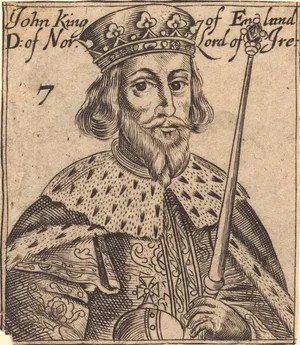

    This principle came into action after King John of England in 1215, stating that:
    “the king and his government was not above the law. It sought to prevent the king from exploiting his power, and placed limits of royal authority by establishing law as a power in itself.”

    This chartered documentation include key factors such as Rule of Law, Due Process, Limitations on Taxation, and Foundational Impact. It was a system to give fairness to the barons and nobles.

    After the act of the Magna Carta, follows the Bill of Rights and the Claim of Right Act in 1689, and the Act of Settlement in 1701. These forms of legislation restricted full power to the monarch from abuses of power. Let’s face it, having this type of power can cause destruction. Having a parliament is better than to leaving it in the hands of one person.

    Queen Consort
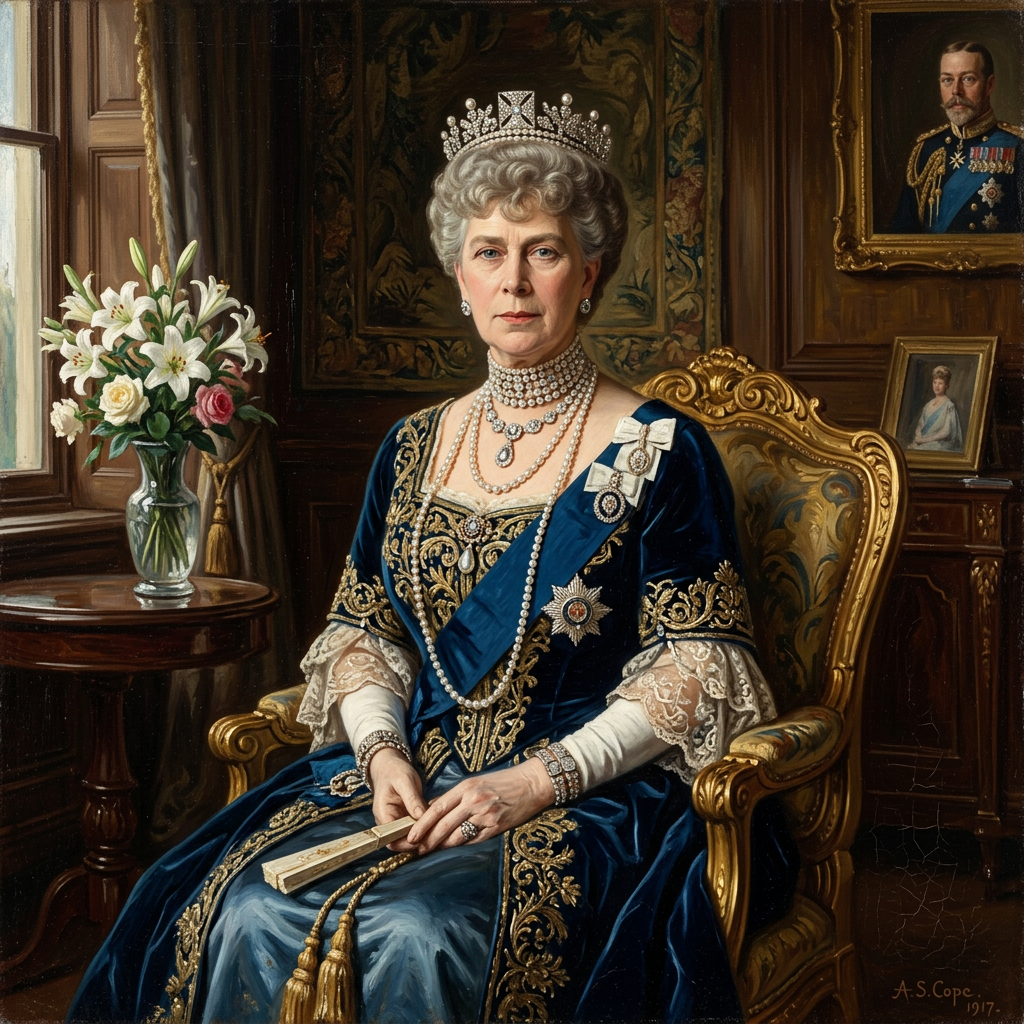
    Queen Mary seated in ornate chair wearing blue velvet gown, tiara, and pearl necklaces holding a fan
    Queen Mary of Teck

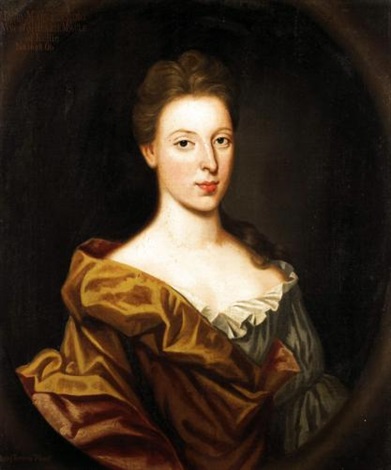
    Now the Queen Consort is just as important as the Queen Regnant, but not so much in responsibilities. She too is also apart of the Monarchy along side of her husband the King. A Queen Consort is someone who is married into the Royal Family and also given a coronation with the King. Throughout history it was an arranged marriage from another country to carry power and prestige. From the example above I chose Queen Mary of Teck. She is in fact the grandmother of Queen Elizabeth II, and was wife to King George V. Her father Francis, Duke was Teck was born in Esseg, Slavonia, which he is of Croatian descent. The relationship was rather common to obtain, since Mary’s mother Mary Adelaide of Cambridge was the first cousin to Queen Victoria.

    Duties & Responsibilities

    • DUTY: Queen Consorts carry the duty of being the companion of the King. Her assistance is to help in ceremonial events, as well as having to support the children in education, and staff management. She too has public appearances with the King, and philanthropic activities she attends. Having heirs gives the Queen Consort a rise in not only prestige, but respect. She is signified as a healthy Queen, who is standing by the side of her husband, and supports him in every way.
    • RESPONSIBILITY: The duty of a Queen Consort is more important reputation to have than responsibility. For she has a little to no responsibility as Consort. Only her husband has power and responsibility over the country. But dressing up and attending ceremonies would make her job a little easier, wouldn’t you think?

    Queen Mother
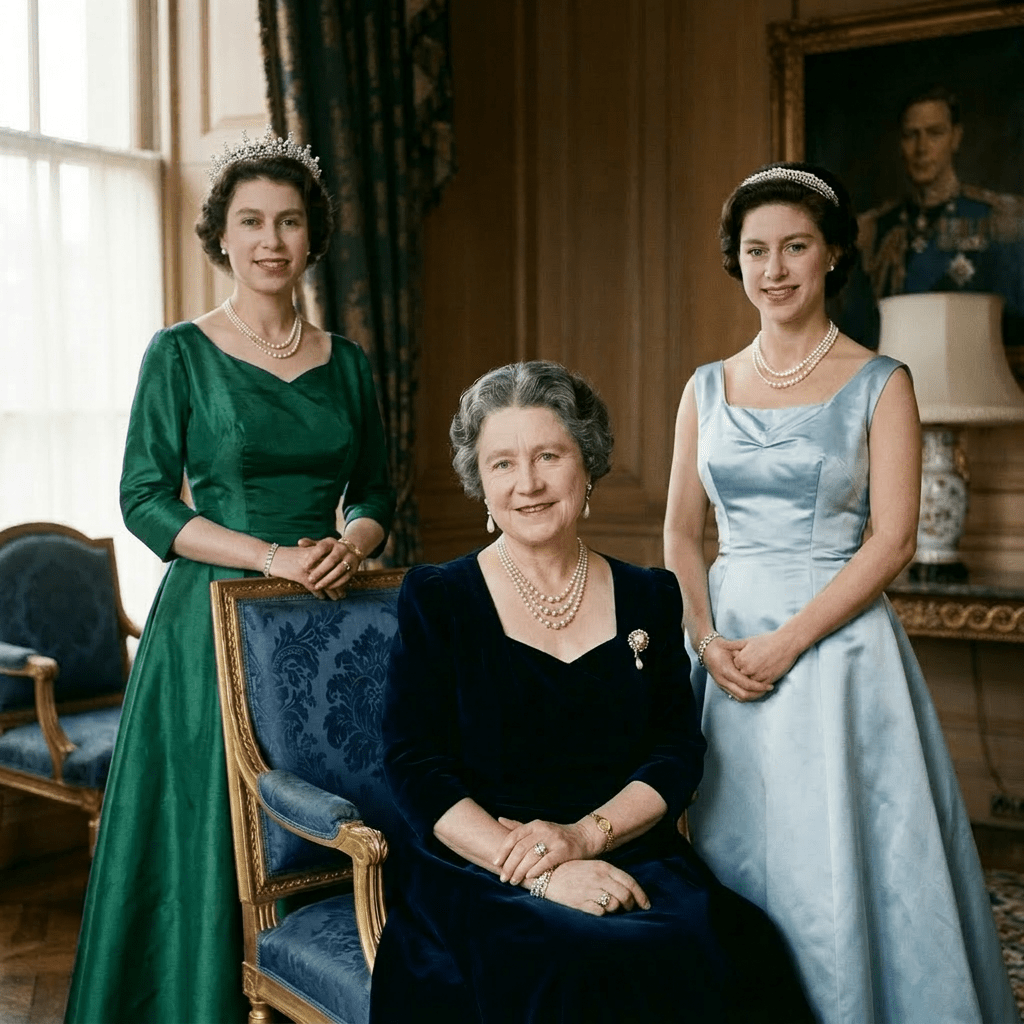
    Three British royal women in formal gowns and jewelry posing indoors
    Sitting: Queen Elizabeth Queen Mother, standing left: Elizabeth II, standing right: Princess Margaret.

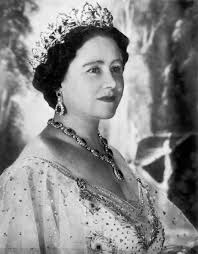
    I would say I had a little bit of overthinking with this position of when and where to place the Queen Mother, or the Queen Dowager, for they are relatively the same, but still have their differences. A Queen Mother, is a women who was married to a King as Queen Consort, but once the King passes and she is the mother to the heir (very important) she then becomes the Queen Mother. The perfect example is Queen Elizabeth II’s mother Elizabeth Bowes-Lyon. She was the wife of King George VI, and mother to Elizabeth and Margaret.

    Duties & Responsibilities

    • DUTY: As the Queen Mother, it is her role to perform official visits, holding patronages for hundreds of organizations, providing stability, and sustaining the monarchy’s public image. She is the one that guides the Monarch within the compass of the realm.
    • RESPONSIBILITY: The Queen Mother participates in charity works, patronages, public engagements, and many other respectable honors in part of the Royal Family.

    Queen Dowager
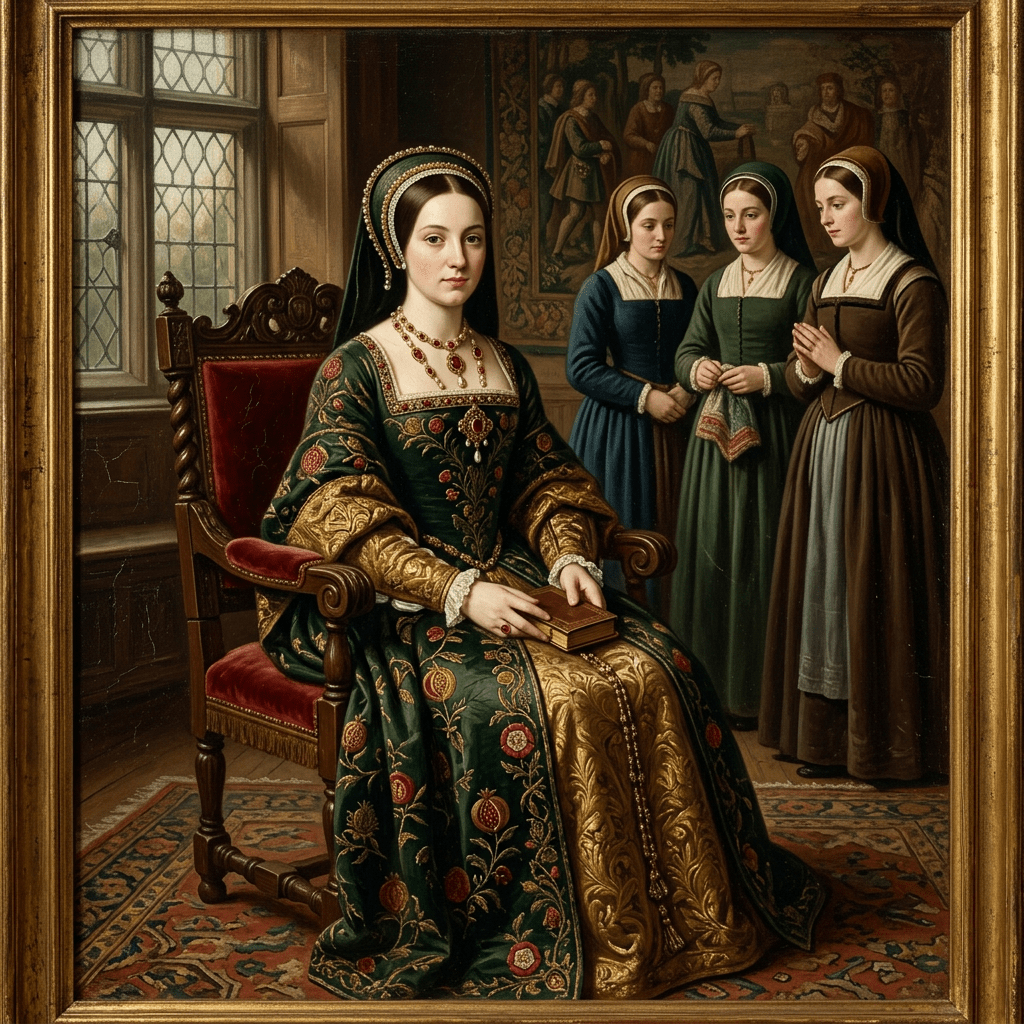
    Noblewoman wearing green and gold embroidered dress sitting on an ornate chair holding a book with three women standing behind her
    Queen Dowager Catherine Parr

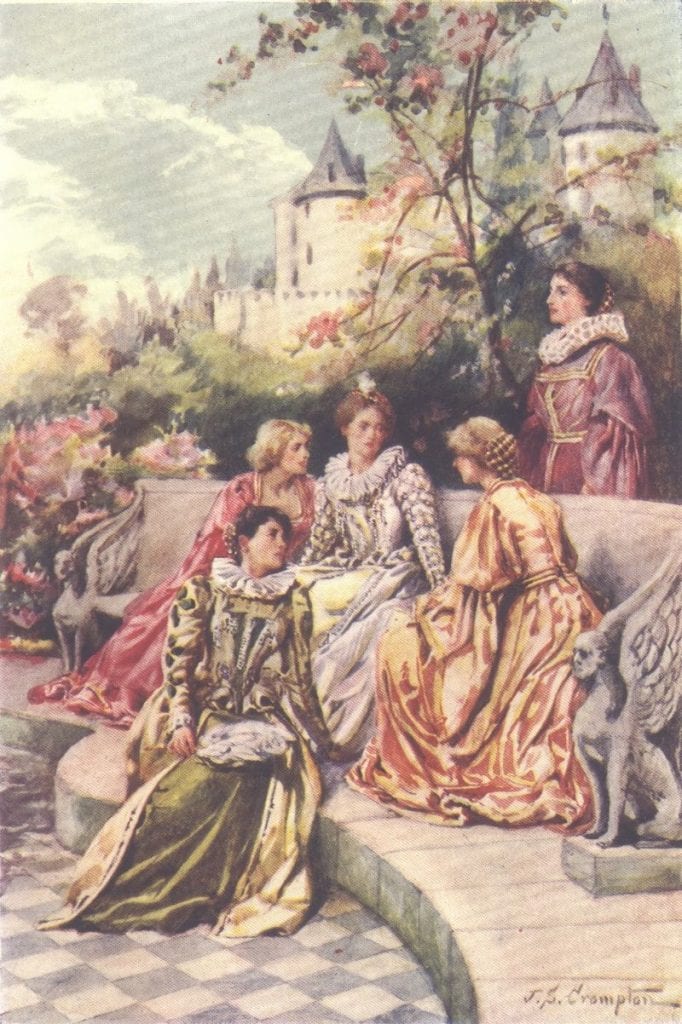
    Being a Queen Dowager is one who is the wife of the King, but the King has died, but the wife does not have her own child as heir. Catherine Parr, known as the 6th and last wife whom ‘survived’ from many of King Henry VIII’s marriages. After the King died, Queen Catherine still had her title, but his oldest daughter Mary, became Queen, and the first Queen by blood (or Regnant) of England and Ireland, and Spain. The dynamics of rank drastically changed once Mary became Queen, as Catherine Parr’s responsibilities were fully reduced, given 7,000 euro as Dowager and into retirement.

    Duties & Responsibilities

    • DUTY: The Queen Dowager, although is not the mother to the heir, still is active when it comes to supporting the monarch, public duties, and patronages.
    • RESPONSIBILITY: If in fact the heir is too young to rule, the Queen Dowager would stand as ‘Regent’, not confusing with “Regnant”. One close example was Queen Mary de Guise, who although was mother of Mary Queen Of Scots, was also a widow of King James V, and became Regent due to Mary beginning the start of her role at 6 days old in 1554.


    References:

    https://www.nationalarchives.gov.uk/education/resources/magna-carta/british-library-magna-carta-1215-runnymede/
    https://www.britroyals.com/windsor.asp?id=mary_teck
    https://www.royal.uk/encyclopedia/queen-elizabeth-the-queen-mother#:~:text=After%20the%20King’s%20death%2C%20The,President%20of%20some%20350%20organisations.
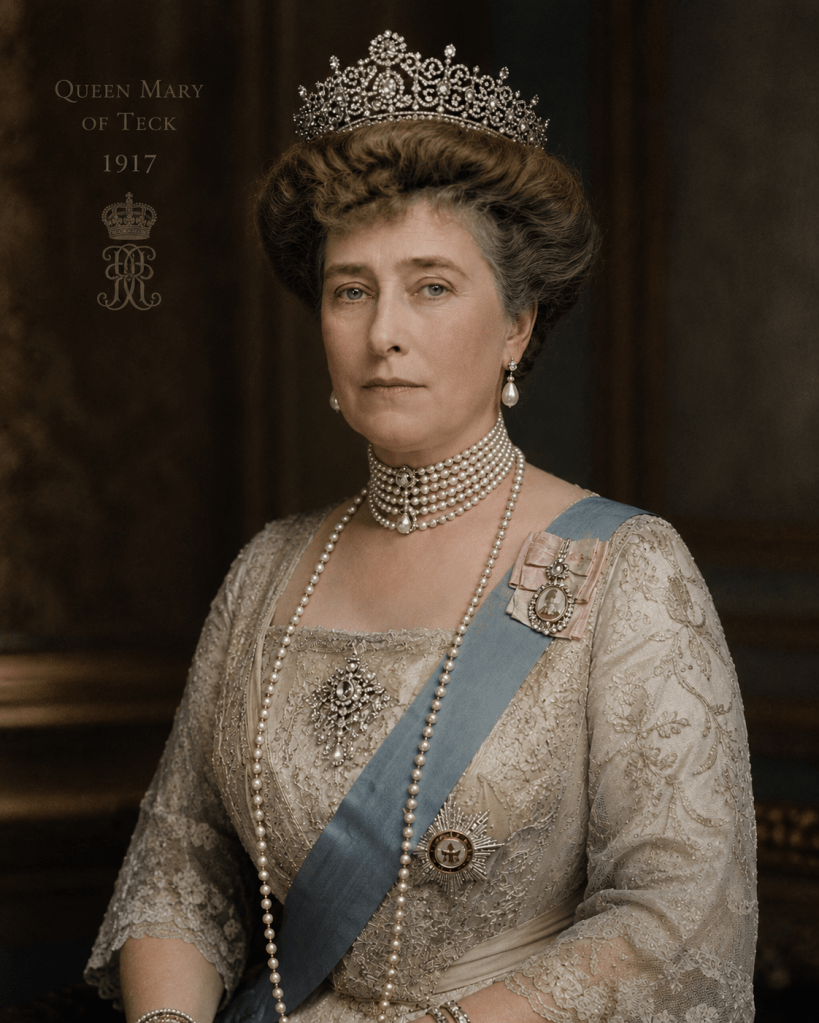
  • (r.1910-1936)

    Mary of Teck served as Queen Consort alongside her husband King George V from May of 1910 to January of 1936. She is the daughter of Francis of Teck, and Mary Adelaide of Cambridge. She is also the great-granddaughter of King George III.

    She was set to marry Prince Albert Victor, Duke of Clarence, but passed away before the marriage exchange in 1892. She then later married Queen Victoria’s other son George, who was second in line to the throne. The two became wed in 1893.

    She was considered the Queen who changed the image and significance of the “House of Windsor.” Looking into the travel glass, during a difficult era of WWI, Germany and Great Britain faced many challenges. It was a moment to choose who showed the most loyalty. It was also a time to determine how to keep the Royal Family from crashing and burning.

    The Queen helped to make it clear to cut ties with Germany, and to disassociate in the Russian Revolution; and their name was changed from Saxe-Coburg and Gotha, to Windsor. To this today that last name still remains with King Charles III.

    Queen Victoria Mary of Teck died in 1952, just 10 weeks before her grand daughter Elizabeth II’s coronation.

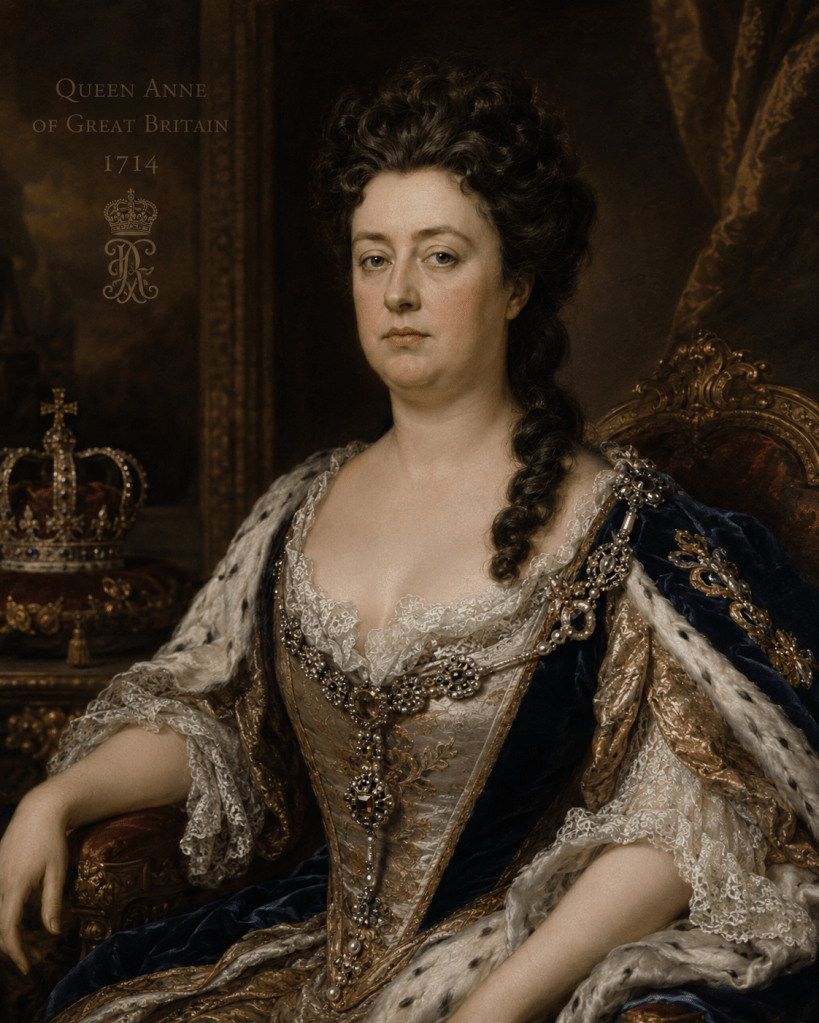
  • (r. 1702-1714)

    Queen Anne became Monarch of England, Ireland, and Scotland in 1702 at the age of 37. She was the daughter of King James II, sibling to Queen Mary II, and cousin to King William III.

    Her personal life was rather difficult. Being that she was Protestant, and her sister Mary was Catholic, the differences in beliefs prevented her from much influence and instruction to power; being that she was next in line. She may have had a pleasant marriage with Prince George of Denmark and Cumberland, but was not able to have any surviving children. Queen Anne became pregnant 18 times, with only one surviving past infancy. After the childs passing in 1700, her hopes have an heir have become lost, and decided to continue the legacy through the Hanovarian family after her passing.

    Once her husband passed away, she gained a close relationship with Sarah Jennings Churchill, but was later dismissed being that the influence Churchill had on Anne, was apart of a campaign that she no longer agreed with.

    Anne dealt with many illnessess along prologned struggles with still births. She died in August of 1714.


    References:
    https://www.britannica.com/biography/Anne-queen-of-Great-Britain-and-Ireland
    https://en.wikipedia.org/wiki/Anne,_Queen_of_Great_Britain

  • It’s been awhile since I’ve made any blogs on my website. I’ve been through some personal things in my life the past few years. I think now I’m on a brighter path and feeling more settled in that I can concentrate on writing again.

    I do love to write about the history of Queens. They seem like such a mystery, but with such power. What were they like? What did they wear? What was their favorite food or most difficult decision they had to make during their reign?

    I hope my blogs find your curiosity just as big as mine. If you haven’t checked out my website, I have it linked here:


    allbritishqueens.com

    Enjoy!

    Tiara O’Kee
    “TutorOfTheQueens”
    info@allbritishqueens.com

  • Everyone remember’s this time of September 11th 2001; the attack of the World Trade Center in New York City. Millions across the world were shocked, and everyone remember’s what they were doing on that day. For me, I was a sophomore in high school walking to school. My brother just started his first year in the Army, and once I go to school, everyone was tuned into the TV watching the buildings up in smoke and flames. Thousands of lives were lost, and this was a day that will never be forgetten in United States history.

    Our cousin country, Great Britain, shared their sentiments to the state of New York, as well as the country from Queen Elizabeth II with a message text read by the British Ambassador to Washington, Sir Christopher Meyer:

    “You come together today in St Thomas church in New York united in sorrow by the terrible events of last week. Each and every one of us has been shocked and numbed by what we have witnessed in these recent days.

    But none of us should doubt the resilience and determination of this great and much loved city and its people. Men and women from many nations, from many faiths and from many backgrounds were working together in New York City when this unimaginable outrage overtook them all.

    At your service today, we think especially of the British victims. For some of them, New York was simply a stopover on some busy travel schedule. For others it was a workplace of excitement and of opportunity. For many it was a familiar second home.

    These are dark and harrowing times for families and friends of those who are missing or who suffered in the attack – many of you here today. My thoughts and my prayers are with you all now and in the difficult days ahead.

    But nothing that can be said can begin to take away the anguish and the pain of these moments. Grief is the price we pay for love.”

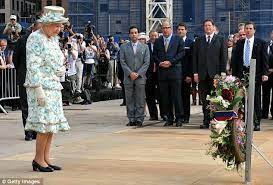
    Not only has the Queen shared her love, gratitude, and philanthropy to her allied country, New York in the year of 2010, she renamed her garden to Queen Elizabeth September 11th Garden” in honor of the lives lost on that tragic day. As well as laying a wreath at World Trade Center. Today, a ceremony was held in the park in rememberance of our fallen Americans and British citizens.

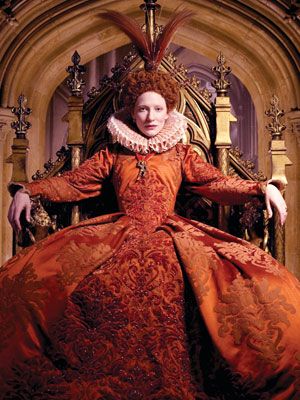
  • There are 2 remarkable movies that reflect the mind and heart of Queen Elizabeth: “Elizabeth” and “Elizabeth – The Golden Age” These movies portray a strong, and observant woman who is proud of her country, but also dealt with many trust issues at court during her reign. I feel that I finally get to see what Queen Elizabeth’s personality could’ve been like during the Tudor-Era.

    Disclaimer: There are some spoilers in this article so I’d recommend you watch both first. Both movies are available on Amazon Prime Video  and free with ads.

    Elizabeth

    Personality

    We’ve read the stories, watched the documentaries, but my inclination was about her personality, how she spoke, her tone and demeanor. Actress Cate Blanchett helped me see an aggressive, passionate, yet young and fearful woman who’s full devotion was to her reign and rule of England.

    In the beginning, the young Elizabeth was strong willed, yet still wanted to come to an understanding of her role. She was constantly persecuted for her beliefs being protestant, but never converted to Catholicism like her half-sister Queen Mary. The majority of the countries Queen Elizabeth had to deal with like Spain, France, and Scotland were Catholic, but the Queen stood her ground.

    Leadership

    Elizabeth I was raised by her mother Anne Boleyn, but watched and observed the roles and duties of her Father King Henry VIII and his councilman. She understood the power that her father had, and carried that knowledge with her to the Throne. She was cunning, incredibly smart, and forgiving to many of those closest to her. Cate Blanchett showed a very shy side of the Queen when dealing with her council. Mainly due to her being a woman as head of state, head of country. The council was small, unlike what England has today: A Prime Minister and Parliament (Like United States, A President and US Congress). During this time, decisions were able to be made at the table instead of waiting until a certain date for the law to potentially be passed. As she grew into her role in the second film, her words were firm and powerful…leading to every woman wanting to be her, and every man wanting to be with her.

    Romance

    Elizabeth felt that she could turn to her one and only true friend and companion,  Lord Robert Dudley. Robert Dudley was later brought on to the privy council, but suffered a bad parental reputation due to his father unable to prevent Mary I to accession. However, Dudley was able to move up in ranking and was becoming the Queen’s favorite. In the first movie we see Dudley and Elizabeth before she was Queen that he would spend time with her and praise her very much, but she later discovers that he was married and that fueled her anger that she decided to never marry and Cate stated the famous quote “I am married to England”. For factual sake, the Queen’s decision to not marry is unclear, but she did want a Mistress than a Master, and was named “The Virgin Queen”.

    The second movie, you see Elizabeth well into her role as Queen, and many suitors are still looking to marry her, however, Cate provides the viewers a glimpse of her wise, powerful mindset of Queendom. She meets a pirate and is enamoured with this stories of the sea. However, he falls for the woman closest to her…her Mistress Beth, which gave the insight and finalization that the Queen remained unmarried.

    Enemies

    Nothing can be more clearer than the multiple enemies Queen Elizabeth had during her reign. Everyone wanted her throne, including her cousin Mary Queen of Scots. Mary was born and raised a Catholic and was destined to take the throne once she became of age. She was also set to marry Elizabeth’s half brother but passed King Edward VI. In the second film, you can see the Queen Of Scots locked away under Elizabeth’s supervision. Their storyline rivalry was not much shown in both movies, but in the first one, the Duke Of Norfolk was beheaded for treason because of his plot to marry The Queen Of Scots, and overthrow the crown of the English Queen. In the end, Queen Mary was beaded as well for treason, her title as Queen has been long gone, and Elizabeth remains victorious.

    I think Cate Blanchett did a great job in both of these movies. It seems as though she enjoyed playing the role, but she definitely brought Queen Elizabeth I into what some think her life would’ve been like.

    If you just spoiled yourself, I still suggest you watch them!

  • State Diadem Crown

    You may have seen this beautiful, and exquisite crown before worn by Her Majesty The Queen Elizabeth II, or photos and time reels of Queen Victoria. This crown was created with passion, beauty, and the desire to have a glamorous lifestyle. With looks of this fabulous crown, it also signifies its duty and service to the state provinces of England, Ireland and Scotland. However, the question remains: How did it go from a King’s head to a Queen? We’ll get into the breakdown of this spectacle of a crown and its creation, but first, we have to take a look into the eyes of its creator.

    “The First Gentleman Of England”

    King George IV (the oldest Uncle of Queen Victoria), became Prince Regnant in 1811 due to his father, King George III being in the state of insanity, then officially began his reign from 1820 after his father died, until 1830. During this time as King, George IV fancied the lifestyle of lavish things: fine jewelry, furniture, paintings, and of course, the State Diadem Crown. With the palace already in trouble with debt from the past interior designs and exterior expenses from the regnant at the time, King George IV had made way to wear this crown on his Coronation day.

    In 1820 the King, wanted the crown a representation England, Ireland, and Scotland in preparation of his coronation in 1821. With that being said are the 3 flowers representing each country; Roses (England), Thistles (Scotland), and Shamrocks (Ireland). Along with pearls surrounding the crown, Christian cross patte’e in between the 3 flowers, 1,333 diamonds, along with a gold and silver frame. This request of such a crown was given to the Royal jewellers Rundell & Bridge, and Rundell; of the cost of 8,216 Euros, which included 800 Euros for the diamonds (keep in mind the debt it was costing the Monarchy). Since they were jewellers respectively to the crown, and the diamonds were leased, Rundell & Bridge, and Rundell decided to sell the diamonds to the royal family, keeping the diamonds on the State Diadem Crown.

    From A King, To A Queen

    Knowing how the King was with his flashy and proud personality, how exactly did this crown go from a King’s head to a Queen?

    Once the King died in 1830, the crown was passed over to his sister-in-law, Queen Adelaide, wife of King William IV (whom is not flashy at all); taking in the theory that the King has died, with his daughter Princess Charlotte who died in 1817, his wife, Queen Caroline of Brunswick, has since passed in 1821, and his father George III, who died in a year earlier in 1820. Queen Adelaide wore this crown until the death of her husband in 1837, making the new heir, Queen Victoria the next Queen of the Monarchy to wear the Crown.

    Victoria loved this crown and wore it to many events like christenings for her children, stamps and portraits. She loved it so much that she declared the crown as an Heirloom so it will pass down from Queen to Queen.

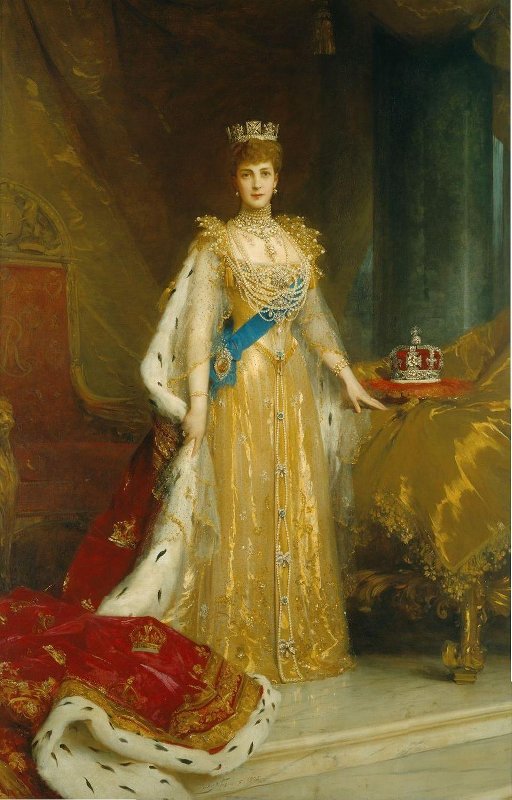
    Queen Alexandria Of Denmark

    Modern Tradition

    Four Queens later after Queen Adelaide: Victoria, Alexandra of Denmark, Queen Mary of Teck, and today, the current Queen Elizabeth II. She has worn this crown for her coronation in 1953, in which where the crown was first worn by King George IV, keeping the traditional style of the coronation ceremony, along with the State Opening of Parliment. This crown is also set in the Queens Gallery at Buckingham Palace when not in use for fans all over the world to view and imagine that gorgeous crown on their own heads.

    Since 1952, Queen Elizabeth II has worn the State Diadem Crown all but 2 times throughout her reign The only times she has not worn the crown was in 1959 when she was pregnant with Prince Andrew, and 1963 when she was also pregnant with Prince Edward. She is the only Queen and sovereign who has worn this crown the longest in British Royal History.

    Even though King George IV was smitten, he took to lengths to remove the Imperial State Crown with the State Diadem Crown. Parliament wasted no time in saying no since it was a part of the history of the monarchy (Crown and Parliament Recognition Act of 1689), also meant to be worn at the closing of coronations, and State Openings of Parliament. 

    I find the State Diadem Crown to be a beauty in its own right with meaning and a proud representation of England, Ireland, and Scotland. King George IV may have been a little flamboyant, but he remembered how much this crown meant to not only himself, but to the Monarchy.

    References

  • Mary, Queen of Scots ruled her reign from when she was six days old in 1542 until 1567, she had to denounce her throne in order to save herself from the incident of her 2nd husband, Lord Darnley (in which he died in a bombing), and fled to England under Queen Elizabeth I’s protection. However, due to the Babington Plot to assassinate Elizabeth, Mary was tried for Treason, and executed by beheading on February 8, 1587. So just out of curiosity, what if Mary was the Queen of England and Scotland? What if Mary never married Lord Darnley? What if she never had to go to prison for 19 years? There would have to be some change of events that would have made this possible. Let’s try to see what could’ve happened if this were to work out for the Queen of Scotland.

    We’ll go back as far as Henry VIII’s 3rd wife Jane Seymour. She was the Queen Consort of England, and the only woman to bear a son King Edward VI. He was born in 1537, Mary, being born in 1542 made Edward and Mary only 5 years apart. In 1543 the Treaty of Greenwich which King Henry VIII organized, was to ensure the next line of succession. Being that Mary was Henry VIII’s grand-neice, it was ordered for Henry’s son Edward to marry Queen Mary by the time she turned 10 years old. Of course, Edward would be 15, allowing him to be more than of age to rule England.

    (Lady Elizabeth Tudor)

    A possibility could’ve been here. King Edward. We can easily say that Edward was in good health, and was able to rule England for another 45 years. Mary and Edward would have their wedding in the year of 1552, which would give Mary her earning as the Queen of England and Scotland; Edward as well. Edward may have considered his older siblings, Mary, daughter of Catherine of Aragon, and Elizabeth, daughter of Anne Boelyn as legitimate children of King Henry, and he would give them the title of princesses, allowing them to have a co-alliance with France (Duphane Francis) and Spain King Phillp). Even if Edward died before Mary, she would be considered the complete role as Queen of England and Scotland, since she’s a ruler already in her own right. If Mary did have a son, no matter the name, he too would also rule England and Scotland (in which that really did happen).

    Another possibility would be during Mary’s time in France. Mary was 16 when her and Duphane Francis wed in 1558, and the Third Succession Act of 1543 was never passed due to overall rule by the council while Edward was still alive, but a little ill, meaning Mary and Elizabeth Tudor were never legitimized, the Queen of Scots and Duphane Frances would be rulers of England, Scotland, and France after Edward’s death in 1553. That would make Mary rule for 34 years from 1553 to 1587. Sure, Mary could’ve provided the opportunity for Mary Tudor with a title because of her Catholicism, but not Elizabeth being that she was a Protestant, leaves her away from court, not providing an opportunity for Elizabeth to plot an assassination on her.

    Let’s consider another one. Let’s say that Elizabeth was legitimized, but the rise of Catholics were dominate. Mary would have an open opportunity to marry Thomas Howard, 4th Duke of Norfolk, The Pope Pius the V would have successfully completed the Regnans in Excelsis in 1570, which would declare Elizabeth not a real Queen of England, excommunicated from England, a heretic, and no longer had subjects that obeyed her. That would have given the Queen Of Scots full right as the Queen of England and Scotland, and Thomas Howard King Consort of England and Scotland.

    With those chances, opportunities, and possibilities, I find it fascinating that Mary could have actually had the chance to become the Queen of England and Scotland. The Vatican was the dominate in all that ruled. Whether it be in France, Scotland, England, or Spain, it was only right for religion to have the number one role in ruling as a King or Queen or in this case, Mary. Catholics all around Europe would be claimed as the dominate continuing since the days of the Roman Empire. However, since free will has been given over the earth, Henry VIII realized that there was more than one battle to face besides religion and that was love. To conquer ended up being division between Queens, Kings, and Councilmen. I think that if Mary was the Queen of England, she may have been loved by the people with keeping the Catholic faith alive, love her charm, wit, and quick political action. She would be producing a son named James, as he would be the next ruler. She would build an alliance relationship with France and Spain, and she would mulitiply income where people can live peacefully.

  • Reference Here

    There is a nice poem that goes
    “Mary, Mary, quite contrary..how does your garden grow?
    With silver bells and cockel shells,
    And pretty little maids, all in a row..” This poem is said to relative to Mary, Queen Of Scots, and her Ladies-In-Waiting, all named Mary. Mary Fleming, Mary Beaton, Mary Sheaton, and Mary Livingston or famously known as “The Four Maries”. These woman played a huge role in Queen Mary’s life (you can also enjoy the show Reign on Netflix. Complete with 4 seasons).

    Mary Fleming

    Mary Fleming was born in 1542 in Scotland, and the cousin of Mary Queen Of Scots. At the age of 5, Fleming and her mother accompanied Mary Queen of Scots when she went to France during Henry II’s reign. As she got older, she married a man named Sir William Maitland of Lethington; the Queen’s Secretary of State. Fleming was considered Mary’s closest friend and companion throughout the French Court and later, Mary’s turmoil. According to University of St. Andrews “Lady Lethington, she was now known, must have been tormented by the dramatic events that unfolded after she and her husband parted company from her cousin, the queen. As wife to Maitland, she now had dual loyalties, but she may have played a part in eventually persuading him to return to Mary’s side.” The quarrel between the Queen and Queen Elizabeth I had Fleming and her husband caught in the middle. Later in the years, Fleming’s husband died in 1573, and she never saw her cousin the Queen again after 1567.

    Mary Beaton

    Mary Beaton was also born in Scotland in the year 1543. She was highly recommened by the Queen’s Mother Mary De Guise to be her lady-in-waiting, as was her mother a lady-in-waiting to Mary De Guise. When she was 5 she traveled with the Queen to France to accompany her at court. As she got older, she was considered “pretty and plump” for she had golden hair and brown eyes, but was a looker onto older men. Beaton married in 1566 to Alexxander Ogilvy and had a son named James in 1568. History has it that Beaton interestingly had similar style handwriting as the Queen after her execution, really not knowing if that was hers or the Queen’s due to the fact that it may have been used to incriminate the Queen.

    Mary Seton

    Mary Seton was born in Scotland in the year 1541 and was also recommened by the Queen’s mother to go to the french court. She was known to be the Queen’s hairdresser. The Seton History stated “Yet, through confinement, disappointment, deprivation, sickness, discomfort, insult, and trouble, Mary Seton was always there“. While the Queen was imprisoned, Seton was there by her side for 15 years. She was the only one out of The Four Maries who chose not to marry. “It is nearly twenty years since I left Scotland, and in that time it has pleased God to take the best part of my relations, friends, and acquaintances; nevertheless, I presume there remain still some who knew me, and I shall be obliged by you remembering me to them as occasion may serve. I cannot conclude ” [now the real purpose of her letter declares itself] ” without adding still one word, that I am in extreme pain and distress at the news which has reached here of a fresh trouble which has fallen on the Queen my maistresse. Time does not permit me to write more. Written from Rheims with my humble recommendations, praying God, Monsieur de Courcelles, to make you more content than I now am, this 21st of October, your humble and obliged—MARIIE DE SETON.”

    Mary Livingston

    Mary Livingston was born also in 1541 in Scotland and was considered from the Queens Mother to be by her side until the very end. All four of the Mary’s were properly cared for and went take to lessons at  Dominican Royal Priory of Saint Louis at Poissy. Here they learned the necessary skills of nobility, art, to be wives of nobelmane, and attendance to the Queen. In 1565, Livingston went on to marry a man named John Sempill, 4 months before the Queen’s 2nd marriage to Lord Darnley. Livingston was also responsible for the Queen’s robes and jewelery bestowed upon Mary’s Will if anything should happen to her. When the Queen was taken to England to be imprisoned in 1568, Livingston was to hold some of her jewels. Livingston’s husband died in 1579, and she died 4 years later in 1583.

    I found the lives of these women were very interesting for each, but I also learned how loyal they were to their Queen. Their stories are unique in their own way. Also if you are interested in the Movie “Mary, Queen Of Scots” (2018), it is available on Amazon Prime, as well as other documentaries about the Queen.

    References:

  • English Coat Of Arms

    From the her Majesty The Queen to a Lady, titles have been with the British, Irish, and Scottish nobles for centuries; but what are the titles for? Also, why do titles appear to come off as confusing and/or misunderstood? I’m here to provide you with a full break down of titles with their roles and duties (whichever one you are interested in, you can scroll down until you find it) :)

    King & Queen

    I thought it would be best to start from the highest (and most familiar) Title and that is the King and Queen. There is only one type of King, but two types of Queens:

    King George VI, Father of Queen Elizabeth II and Former King of United Kingdom and Ireland

    The role of the King or Sovreign is considered as the leader and ruler of the people or country. There was a time when the Monarchy had power over politics of the country, but after the Magna Carta of 1215, the sovreign must have legal descisions approved by council or what we call today, a parliment. The King is a symbolism of the head of state. The Head of Government however, is the Prime Minister.

    Queen Regnant

    Queen Consort

    Queen Victoria
    Queen Elizabeth The Queen Mother

    As noted earlier, there are 2 different types of Queens (well, actually 4, but I’ll get to that part in a moment, and why I said 2). To your left, you see Victoria as Queen Regnant, meaning she is the queen in her right as deserving by blood line. Women were never absent from the role of taking the throne, but since religion and family played a big factor during these times, it was intended and hoped for men to take the throne. To your right, to see Queen Elizabeth The Queen Mother (Queen Elizabeth II’s mother) as Queen Consort, meaning she was married to a King. If the King dies before the Queen Consort, then she is considered as Queen Dowager. In this particular instance, Elizabeth has witnessed her husband die, and her daughter Elizabeth II to become queen, which also gives her the name as Queen Mother (see how that works?)

    Duke & Duchess

    Now you might think that I would have put Prince & Princess next here, but….let me explain. The Duke is the highest in ranking next to the King or Queen, whichever is on the throne. This title can be earned by the King or Queen. There is another Title named Grand Duke or Arch Duke before the title Duke, but here we’re only referring to Duke. A Duchess is a woman who is married to a Duke for her to earn her title. Remember, since the roles in the Medival stages (when Dukedom started, 1337) honored the man, A Duke cannot earn a title by marrying a woman that was already a Duchess. Dukedom does not have to be an inhereted title.

    Prince & Princess

    Prince Albert of Sax-Coburg

    A Prince is an inhereted title from whomever is on the throne by blood. Usually, it is the next in line to the throne if they are the first born; but it wasn’t until the Perth Agreement in 2015, allowed the next sibling (whether male or female) to become next in line of succession (if the first born does not have chidren). Here, you can see Prince Albert was already a Prince, but once he married Queen Victoria, he became Prince Consort. You may ask yourself “Well why wasn’t he a King Consort if he married a Queen?” Victoria wanted her husband to become King Consort, but her council would not allow him because of where he was from (Germany). There are some perks however; if a Prince marries a queen, he has a higher ranking than his children (Hence Prince Philip, Duke of Edinburgh). But if he is not around his wife, then his children rank higher than he does. The Duke and the Prince rankings somewhat intertwine with each other, depending on who their around. A Princess is also an inhereted title from either the King or Queen of royal blood. Her ranking also applies the same as a duchess. A princess can marry, but her husband will not become a prince. Another ranking for a princess is a Princess Royal, which is the first born girl of the royal family.

    Victoria, Princess Royal. Oldest and 1st born girl of Queen Victoria and Prince Albert

    Marquess & Marchioness

    These two titles may have not really been talked about, but that is why you’re reading this now! The Ranking of the Marquess (Mark-Key) is lower than a Duke, and their role was to protect the Monarchy of any potential enemies throughout the United Kingdom. A Marchioness (Mar-Shuness) is a woman or a widow of a Marquess earning her right to this particular title. She too is a ranking below a duchess.

    Earl & Countess

    An Earl held the title with more control over land and finances. They are the ones who keep track of any debts and taxes that needs to be collected if they had land being used for tenants. This title can be earned by King or Queen, and by inheretence. A Countess or Lady is a title by marriage to an Earl. She would have to earn this title by marriage (I hope you are noticing the pattern on how the women earn their titles!) Also, if the father is a Duke, the titles descends from there (Duke, Marquess, Earl, Viscount, Baron, etc.), until the father passes, then the older son becomes a duke.

    Viscount & Viscountess

    For A Viscount, you would consider their role as a Lietenant or deputies in in control of delegations. This title is normally earned by inheritence his father is a Duke or even a King. A Viscountess of course is married or is a widow to a Viscount. She has earned her right as such, and is Also called a Lady.

    Baron & Baroness

    This may be one of rankings towards the bottom, but still has significant roles. A Baron is what you would call “loyalty for land”. This means that he pledges loyalty to the throne and in return is given land that he can pass down to his children. A Baroness Title is earned once married, but is very responsible within her Barony. In Government today, there are Baroness’ joined together with the Barons under The House Of Lords. 

    Knight & Dame 

    A Knight is there to protect the lands of the monarchy as a warrior and able to withstand long days at war. A Dame is the wife of the Knight, or a member of knighthood.

    Esquire

    An Esquire is responsible for the land of the Knight, but not yet a Knight himself. Today it is more used at the end, or no significance at all. Others use it if they’re practicing Law. However, if you want to know the best social status? Esquires.

    Lord & Lady

    This is the lowest ranking throughout nobility, but just as familiar as the King & Queen (interesting right?) In the Medieval days, a Lord or Gentlemen obtains the role of all the land that surrounds him. Owned a high responsibility. Today this role is established under Government through Parliament. A Lady is a woman that not only is married to a Lord, but considered as a personal assistant to Royalty. She is also called a Lady-In-Waiting.