Category: Elizabeth I

  • There are 2 remarkable movies that reflect the mind and heart of Queen Elizabeth: “Elizabeth” and “Elizabeth – The Golden Age” These movies portray a strong, and observant woman who is proud of her country, but also dealt with many trust issues at court during her reign. I feel that I finally get to see what Queen Elizabeth’s personality could’ve been like during the Tudor-Era.

    Disclaimer: There are some spoilers in this article so I’d recommend you watch both first. Both movies are available on Amazon Prime Video  and free with ads.

    Elizabeth

    Personality

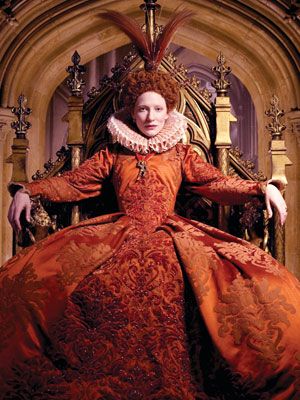
    We’ve read the stories, watched the documentaries, but my inclination was about her personality, how she spoke, her tone and demeanor. Actress Cate Blanchett helped me see an aggressive, passionate, yet young and fearful woman who’s full devotion was to her reign and rule of England.

    In the beginning, the young Elizabeth was strong willed, yet still wanted to come to an understanding of her role. She was constantly persecuted for her beliefs being protestant, but never converted to Catholicism like her half-sister Queen Mary. The majority of the countries Queen Elizabeth had to deal with like Spain, France, and Scotland were Catholic, but the Queen stood her ground.

    Leadership

    Elizabeth I was raised by her mother Anne Boleyn, but watched and observed the roles and duties of her Father King Henry VIII and his councilman. She understood the power that her father had, and carried that knowledge with her to the Throne. She was cunning, incredibly smart, and forgiving to many of those closest to her. Cate Blanchett showed a very shy side of the Queen when dealing with her council. Mainly due to her being a woman as head of state, head of country. The council was small, unlike what England has today: A Prime Minister and Parliament (Like United States, A President and US Congress). During this time, decisions were able to be made at the table instead of waiting until a certain date for the law to potentially be passed. As she grew into her role in the second film, her words were firm and powerful…leading to every woman wanting to be her, and every man wanting to be with her.

    Romance

    Elizabeth felt that she could turn to her one and only true friend and companion,  Lord Robert Dudley. Robert Dudley was later brought on to the privy council, but suffered a bad parental reputation due to his father unable to prevent Mary I to accession. However, Dudley was able to move up in ranking and was becoming the Queen’s favorite. In the first movie we see Dudley and Elizabeth before she was Queen that he would spend time with her and praise her very much, but she later discovers that he was married and that fueled her anger that she decided to never marry and Cate stated the famous quote “I am married to England”. For factual sake, the Queen’s decision to not marry is unclear, but she did want a Mistress than a Master, and was named “The Virgin Queen”.

    The second movie, you see Elizabeth well into her role as Queen, and many suitors are still looking to marry her, however, Cate provides the viewers a glimpse of her wise, powerful mindset of Queendom. She meets a pirate and is enamoured with this stories of the sea. However, he falls for the woman closest to her…her Mistress Beth, which gave the insight and finalization that the Queen remained unmarried.

    Enemies

    Nothing can be more clearer than the multiple enemies Queen Elizabeth had during her reign. Everyone wanted her throne, including her cousin Mary Queen of Scots. Mary was born and raised a Catholic and was destined to take the throne once she became of age. She was also set to marry Elizabeth’s half brother but passed King Edward VI. In the second film, you can see the Queen Of Scots locked away under Elizabeth’s supervision. Their storyline rivalry was not much shown in both movies, but in the first one, the Duke Of Norfolk was beheaded for treason because of his plot to marry The Queen Of Scots, and overthrow the crown of the English Queen. In the end, Queen Mary was beaded as well for treason, her title as Queen has been long gone, and Elizabeth remains victorious.

    I think Cate Blanchett did a great job in both of these movies. It seems as though she enjoyed playing the role, but she definitely brought Queen Elizabeth I into what some think her life would’ve been like.

    If you just spoiled yourself, I still suggest you watch them!

  • Mary, Queen of Scots ruled her reign from when she was six days old in 1542 until 1567, she had to denounce her throne in order to save herself from the incident of her 2nd husband, Lord Darnley (in which he died in a bombing), and fled to England under Queen Elizabeth I’s protection. However, due to the Babington Plot to assassinate Elizabeth, Mary was tried for Treason, and executed by beheading on February 8, 1587. So just out of curiosity, what if Mary was the Queen of England and Scotland? What if Mary never married Lord Darnley? What if she never had to go to prison for 19 years? There would have to be some change of events that would have made this possible. Let’s try to see what could’ve happened if this were to work out for the Queen of Scotland.

    We’ll go back as far as Henry VIII’s 3rd wife Jane Seymour. She was the Queen Consort of England, and the only woman to bear a son King Edward VI. He was born in 1537, Mary, being born in 1542 made Edward and Mary only 5 years apart. In 1543 the Treaty of Greenwich which King Henry VIII organized, was to ensure the next line of succession. Being that Mary was Henry VIII’s grand-neice, it was ordered for Henry’s son Edward to marry Queen Mary by the time she turned 10 years old. Of course, Edward would be 15, allowing him to be more than of age to rule England.

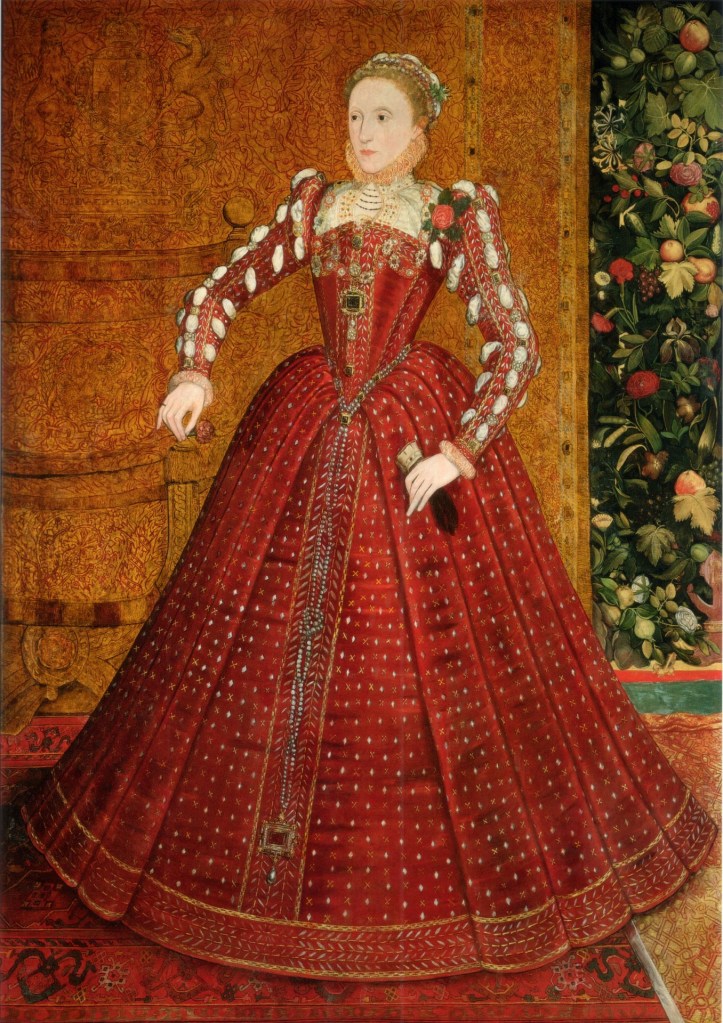
    (Lady Elizabeth Tudor)

    A possibility could’ve been here. King Edward. We can easily say that Edward was in good health, and was able to rule England for another 45 years. Mary and Edward would have their wedding in the year of 1552, which would give Mary her earning as the Queen of England and Scotland; Edward as well. Edward may have considered his older siblings, Mary, daughter of Catherine of Aragon, and Elizabeth, daughter of Anne Boelyn as legitimate children of King Henry, and he would give them the title of princesses, allowing them to have a co-alliance with France (Duphane Francis) and Spain King Phillp). Even if Edward died before Mary, she would be considered the complete role as Queen of England and Scotland, since she’s a ruler already in her own right. If Mary did have a son, no matter the name, he too would also rule England and Scotland (in which that really did happen).

    Another possibility would be during Mary’s time in France. Mary was 16 when her and Duphane Francis wed in 1558, and the Third Succession Act of 1543 was never passed due to overall rule by the council while Edward was still alive, but a little ill, meaning Mary and Elizabeth Tudor were never legitimized, the Queen of Scots and Duphane Frances would be rulers of England, Scotland, and France after Edward’s death in 1553. That would make Mary rule for 34 years from 1553 to 1587. Sure, Mary could’ve provided the opportunity for Mary Tudor with a title because of her Catholicism, but not Elizabeth being that she was a Protestant, leaves her away from court, not providing an opportunity for Elizabeth to plot an assassination on her.

    Let’s consider another one. Let’s say that Elizabeth was legitimized, but the rise of Catholics were dominate. Mary would have an open opportunity to marry Thomas Howard, 4th Duke of Norfolk, The Pope Pius the V would have successfully completed the Regnans in Excelsis n 1570, which would declare Elizabeth not a real Queen of England, excommunicated from England, a heretic, an no longer had subjects that obeyed her. That would have given the Queen Of Scots full right to become the Queen of England and Scotland, and Thomas Howard King Consort of England and Scotland.

    With those chances, opportunities, and possibilities, I find it fascinating that Mary could have actually had the chance to become the Queen of England and Scotland. The Vatican was the dominate in all that ruled. Whether it be in France, Scotland, England, or Spain, it was only right for religion to have the number one role in ruling as a King or Queen or in this case, Mary. Catholics all around Europe would be claimed as the dominate continuing since the days of the Roman Empire. However, since free will was given over the earth, Henry VIII realized that there was more than one battle to face besides religion and that was love. To conquer ended up being division between Queens, Kings, and Councilmen, I think that if Mary was the Queen of England, she may have been loved by the people with keeping the Catholic faith alive, love her charm, wit, and quick political action. She would be producing a son named James, as he would be the next ruler. She would build an alliance relationship with France and Spain, and she would mulitiply income where people can live peacefully.

  • Queen Elizabeth I held her reign during the Renaissance Era; full of music, dancing, creativity, and art. With art, the English court had a mulititude of creative painters, one who’s name was Levina Teerlinc.

    Levina Teerlinc was known as a “miniaturist” painter for the Royal family including Henry VIII, Edward VI, Mary I, and Elizabeth I (basically the Tudor Family).. She practiced a form of creating smaller paintings; a style made for lockets, pendants, and necklaces. According to My Daily Does of Art, “Teerlinc is credited with inventing the oval shape for the miniature portrait. Prior to the oval shape, these tiny portraits came only in rectangular shapes.”

     Levina was not the only painter allowed at court. A man named Nicholas Hillard practiced the miniaturist painting style as well. “His earliest known attempts at miniature painting were made in 1560, and his talent is obvious in Self Portrait Aged 13 and Edward Seymour, Duke of Somerset. Hilliard became miniature painter to Queen Elizabeth I about 1570 and made many portraits of her and of the leading members of her court.” – Britannica

    There are plenty other artists that painted for the Elizabeth I including George Gower, Robert Peake The Elder, Quentin Metsys, Steven Van der Muelen, and William Segar. Teerlinc was also allowed as privy council under Elizabeth I, gained a starting salary of 40 pounds ($ 55 in USD), and her paintings were considered ““a Carde with the Queen’s Matie [Majesty] and many other personages” – Being Bess. Although she did not sign her paintings, she is signified as one of the best painters for the Tudor family, and some of her work is sometimes hard to recognize in this present day from the other painters.

    References;