• Whatever Happened to Queen Catherine?

    Catherine of Aragon was the first wife of Henry VIII. They produced and heir to the throne named Mary. Catherine faced many difficult birth attempts and had still borns (which could today leave a woman dealing with post-partum depression). However, Henry was deteremined to have a son, therefore he chose to go against the Catholic Priest and wanted to have their marriage annuled and desired another woman named Anne Boelyn. So whatever happened to Catherine after the divorce?

    In a sense, Catherine was booted out of the castle immediately and transferred many times until her and her daughter were placed at Kimbolton Castle.
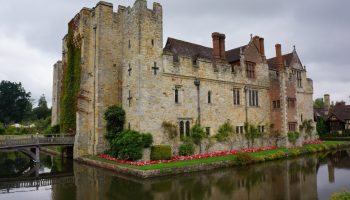
    Her and her daughter Mary were to live in separate chambers of this castle and was not allowed to see or write letters to each other. Some sources say that there was compassion for the two, and some of the letters were able to be fully exchanged. Later, Henry wanted to offer Catherine a deal: To declare Anne Boelyn as Queen and in return have a better living quarters and able to see her daugther Mary. Both Catherine and Mary refused to accept this offer. Both went from Queen and Princess to ladies. If I would understand their feelings, I would feel betrayed. Catherine refused to return the jewels that are for the Queens, and still called herself the lawfully wedded wife of Henry VIII.

    As Catherine got older, she decided she wanted to write her Will. She wanted her nephew to protect her daughter. Sources say she wrote a last letter to Henry stating:

    My most dear lord, king and husband,

    The hour of my death now drawing on, the tender love I owe you forceth me, my case being such, to commend myself to you, and to put you in remembrance with a few words of the health and safeguard of your soul which you ought to prefer before all worldly matters, and before the care and pampering of your body, for the which you have cast me into many calamities and yourself into many troubles. For my part, I pardon you everything, and I wish to devoutly pray God that He will pardon you also. For the rest, I commend unto you our daughter Mary, beseeching you to be a good father unto her, as I have heretofore desired. I entreat you also, on behalf of my maids, to give them marriage portions, which is not much, they being but three. For all my other servants I solicit the wages due them, and a year more, lest they be unprovided for. Lastly, I make this vow, that mine eyes desire you above all things.
    Katharine the Quene.

    On January 7th of 1536, Catherine of Aragon died at the age of 50 In Kimbolton Castle.

    References:

  • Grace O’Malley

    (r. 1530-1603)

    Grace O’Malley or Gráinne Ní Mháille was born in 1530 in Umhaill, Connacht, Ireland. She was known as “The Pirate Queen”. She may not have had a crown, but she was a land owner, Sea Captain, and Political Activist. When she was a young adolescent, her father would not allow her to board ships due to her being a girl, however, Grace was so determined that she cut her hair to appear as a boy in order to get on the ship.

    Throughout her life and marriages she has had many losses, but gained her land overtime, and became the Captain after her father passed. She had a minor encounter with Queen Elizabeth I since the English we’re owning more land of Ireland, but Grace requested for her sons and half-brother to be released from prison, and Elizabeth granted her. In turn she lost some of her land as it was never resolved.

    Grace was clever and charming, as well as intelligent, cunnig, and brave. Interestingly enough, she died the year of 1603.. The same year as Elizabeth I.

  • Social Media

    Follow our Social Media Platforms on Twitter and Instagram!!

    Twitter; @queens_british
    Instagram: @british.queens

  • Where Did The Dress Style Victorian Come From?

    Queen Victoria held her reign from 1837-1901, and during this time the changes inspired by her small stature, created an intricate, and elegant style from the Georgian Era (King George III, George Washington), and made it her own.

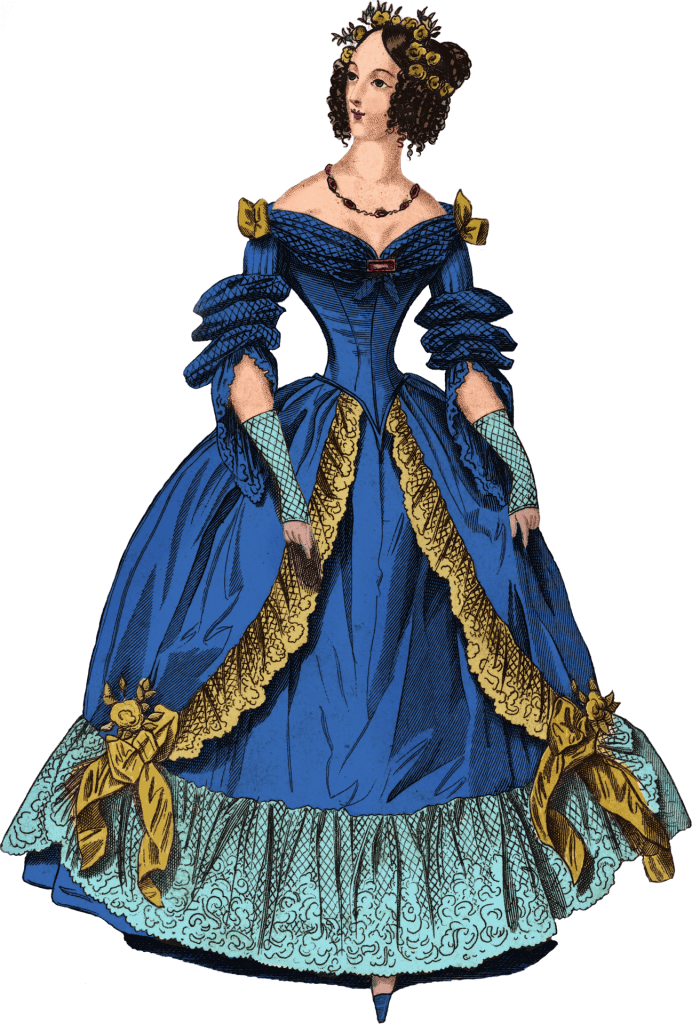
    Victoria leaned on her stylist named Marianne Skerrett. Skerrett was her head dresser from the moment Victoria became Queen until 1862. She made sure of Victoria’s gloves, shoes, hats, and undergarments. Vintage Connection says “The styles of the late 1830s, consisting of a close-fitting bodice, natural waist, and bell-shaped skirt, were particularly becoming to the 4’11” queen. Her lack of height and a tendency toward plumpness made her look best in simple well-tailored clothes such as riding habits.” Puffy sleeves, and puffy skirt along with a small, tiny waist (or boning for the corset) gave off a lady-like figure for the small queen. In earlier days, wide skirts were supported by fabrics like linen which used horsehair in the weave. She also let it be known that all of her dresses are British made only.

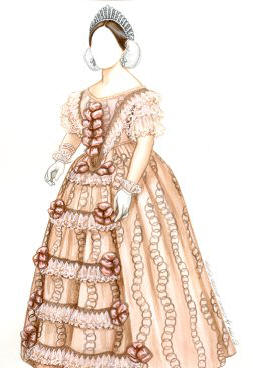
    Visit to France
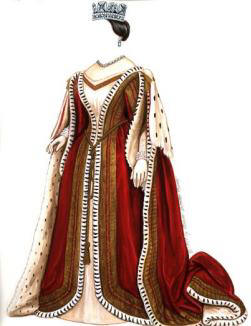
    Queen Victoria: Coronation Dress
    Horse Riding

    Thus, in turn, invited a new style across the world even to the United States with a western style with a little less flair. During the Victorian Era of fashion, this was a time to show the new beginnings of the female since there was a Queen on the throne. Also this meant the difference of money. Whoever had the nicests dresses, meant that the women were from a rich family, or from royalty; in which the women did not have to work. Women of the working class would have their dresses less flair and color. If you think about it, women’s embodiment was in its early phases and sprining into action of the capabilites of the new dress reform.

    The dresses may have been very pretty, but weren’t very comfortable. It was hard to try to get the smallest waist due to the corset to try and look their best and suitable for royalty and society. Their sleeves became lower which gave a little more difficulty raising their arms. Over the course of Victoria’s reign, the style started to come a little less restricted with their corsets and wide dresses, to longer, no corset, but comfortable fitting dresses. Queen Victoria was able to utilize her short frame and less widened shoulders to change the look and fashion of dresses. She was a young Queen in 1837, but she wanted to give a new look for the ages.

    References:

  • Who Was Queen Elizabeth I’s Painter?

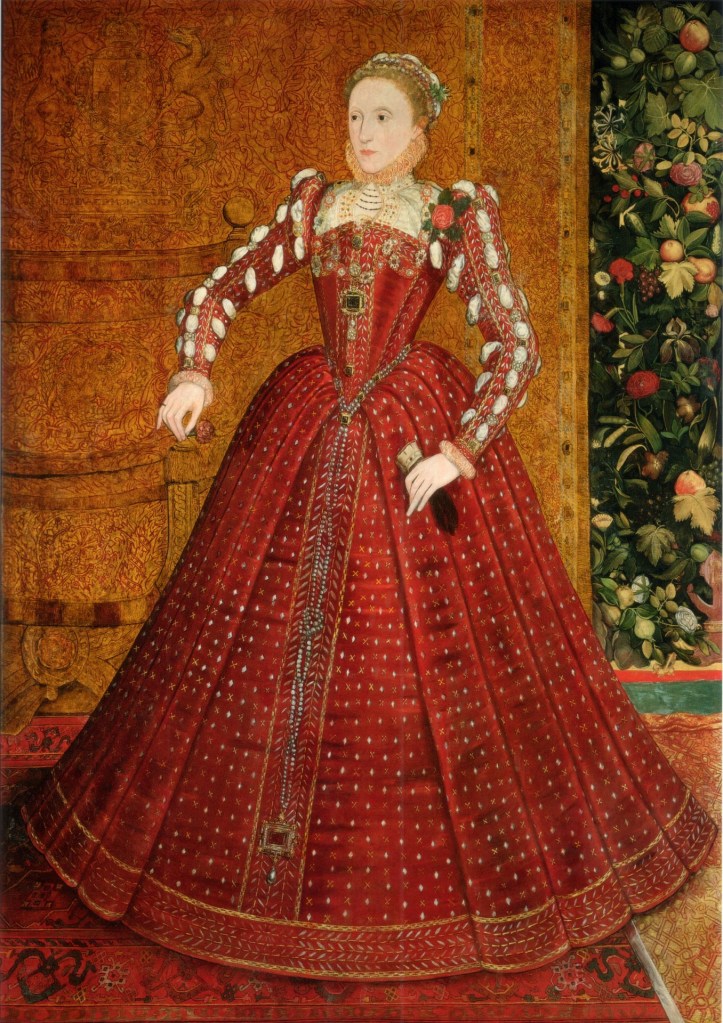
    Queen Elizabeth I held her reign during the Renaissance Era; full of music, dancing, creativity, and art. With art, the English court had a mulititude of creative painters, one who’s name was Levina Teerlinc.

    Levina Teerlinc was known as a “miniaturist” painter for the Royal family including Henry VIII, Edward VI, Mary I, and Elizabeth I (basically the Tudor Family).. She practiced a form of creating smaller paintings; a style made for lockets, pendants, and necklaces. According to My Daily Does of Art, “Teerlinc is credited with inventing the oval shape for the miniature portrait. Prior to the oval shape, these tiny portraits came only in rectangular shapes.”

     Levina was not the only painter allowed at court. A man named Nicholas Hillard practiced the miniaturist painting style as well. “His earliest known attempts at miniature painting were made in 1560, and his talent is obvious in Self Portrait Aged 13 and Edward Seymour, Duke of Somerset. Hilliard became miniature painter to Queen Elizabeth I about 1570 and made many portraits of her and of the leading members of her court.” – Britannica

    There are plenty other artists that painted for the Elizabeth I including George Gower, Robert Peake The Elder, Quentin Metsys, Steven Van der Muelen, and William Segar. Teerlinc was also allowed as privy council under Elizabeth I, gained a starting salary of 40 pounds ($ 55 in USD), and her paintings were considered ““a Carde with the Queen’s Matie [Majesty] and many other personages” – Being Bess. Although she did not sign her paintings, she is signified as one of the best painters for the Tudor family, and some of her work is sometimes hard to recognize in this present day from the other painters.

    References;

  • Yes to the Dress: Queen Victoria’s Dress On Her Wedding Day

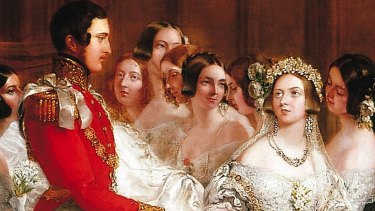
    On this day, February 10, of 1840 the Royal Marriage has been arranged for Queen Victoria Of England, and the love of her life Prince Albert of Saxe-Coburg and Gotha. “We must imagine that her personal happiness must have been so great in anticipation, that she had little time to describe what she wore. We know that she awoke in Buckingham Palace on the morning of 10 February 1840. A watercolour by the artist James Roberts gives us a glimpse of the room, some eight years later. She got up at ¼ to 9 and breakfasted three-quarters of an hour later. The Queen seems to have been more interested in writing a note to her bridegroom, which she wrote as cold rain splashed against the windowpanes. It is tempting to suspect that the Queen was simply impatient and anxious to get to St James’s Palace, to be married to Prince Albert, with whom she was so passionately in love.” –The Royal Central. Although it was a delightful view of their moment of marriage, the preparations and the choice of dress might have been a little bit interesting during that time.

    The designer of the lace was a man named William Dyce from The Royal College of Art, and the maker of the dress was Mary Bettans in Spitalfields (you know, the place where she decided to have her dresses made there for her ball? That place). Together they created a beautiful silk satin white lace and dress for the ages.

    According to the Fashion History TImeline, this dress was “structured, eight-piece bodice features a wide, open neckline. The off-the-shoulder sleeves are short and puffed. The pointed waistline is deep v-shaped, resembling the basque shape. Both the neckline and sleeves were trimmed with lace. The floor-length skirt was very full, containing seven widths of fabric in forward-facing pleats.”

    This dress was also in the color of white. Normally, a royal wedding dress would consist of robes, jewels, and a crown just to name a few things, and the color white (and black) represented the colors of mourning. But Victoria chose white to match the lace of her dress. She also suggested that only her and her bridesmaides wear white dresses as well.

    Ever since the beautiful wedding, Queen Victoria has created a trend of white dresses along with the bridesmaids! Interesting right!? It wasn’t until the modern age of 1950s that dresses counted as a symbol of purity, virginity, and innocence. Today, in days of post-modern era, white is still apart of the beautiful day of marriage, but other colors are now the say so of the bride. I have seen a peacock wedding with those amazing blue and green colors, as well as purple, pink, and even black! The Victorian Era brought out the boldness of fashion, uniquieness, and individualism.

    References:

  • Elizabeth II

    (r. 1952-2022)

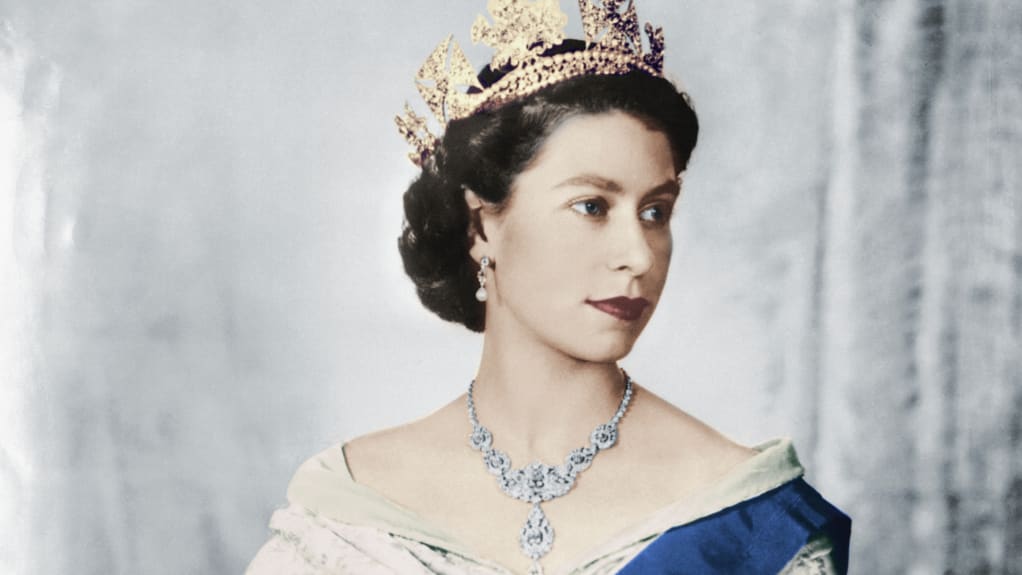
    Queen Elizabeth II or Elizabeth Alexandra Mary Mountbatten-Windsor was the current Queen Of England ever since 1952 when her father King George VI died. She is what I consider the Queen of the Modern Era.

    Elizabeth II held her reign for 69 years, honoring her the Diamond Jubilee, and the year 2022 will mark the year as the Platinum Jubilee for holding her reign for 70 years; in which is already in talks of a 4 day celebration.

    With all the queens before her having power with politics, governance decrease over time once Elizabeth became queen. Quiet, yet keenly intelligent, Elizabeth II makes sure that her duties as Queen remain superior to the Commonwealth, as well as her fans across the world.

    Queen Elizabeth died on September 8th, 2022 in her Balmoral Castle. She was visited by her children and grandchildren at the time of her death. She will forever be remembered as the Queen of our lifetime.

  • Mary, Queen of Scots

    (r. 1542-1567)

    Mary, Queen Of Scots or Mary Stuart became Queen Of Scotland when she was an only 6 days old after her father died. Mary is also the cousin of Queen Elizabeth I by being King Henry VII’s great-granddaughter. However, due to differences in religion between Mary and Elizabeth, there was always conflict for the battle of the English Throne.

    Mary held her reign over Scotland for 25 years. Charming, yet naive, Mary’s reign was cut short after getting caught in a plot to assassinate Elizabeth I. Losing her title as Queen in 1567 and imprisoned for 19 years, she was executed in 1587 for Treason at the age of 44.

  • Mary I

    (r. 1553-1558)

    Mary Tudor or Queen Mary I, held her reign for a short moment from 1553 to 1558. She was the daughter of King Henry VIII, and Queen Catherine Of Aragon. Mary was also the first queen of royal succession to the English Throne.

    Mary went through difficult times in her life, from becoming the Kings princess, to a lady-in-waiting, she felt that all the odds were against her. Luckily her brother King Edward VI decided to bring back to the Royal Court with another opportunity to gain her initial birth right to the thone. Having Edward die at a young age, Mary became Queen in 1553. Due to her decline in health, and troubled marriage from a false pregnancy producing an heir, Mary died at the age of 42, making her half sister, Elizabeth reign Queen.

  • Elizabeth I

    (r. 1558-1603)

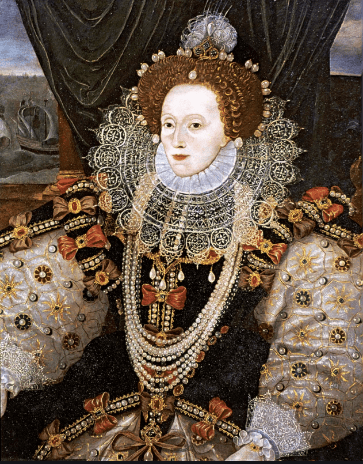
    Queen Elizabeth I (Elizabeth Tudor) was Queen Of England from 1558 to 1603. She was considered very powerful, and also very loved. She had her differences with religion amongst her sister Queen Mary I and Mary Queen Of Scots, which became almost always a battle to hold her throne.

    She was known as “The Virgin Queen”. because she chose not to marry. She grew up around men, and was taught many languages therefore making Elizabeth feel more than qualified to earn the Crown. Once she became queen after her sister Mary died, she was immediately ready to take the throne. She was attentive in council (all ran by men at the time), and was invested in the choices that were made. She was a natural born leader, and handled wars and government with class. Her reign lasted for 45 years.