Category: Uncategorized

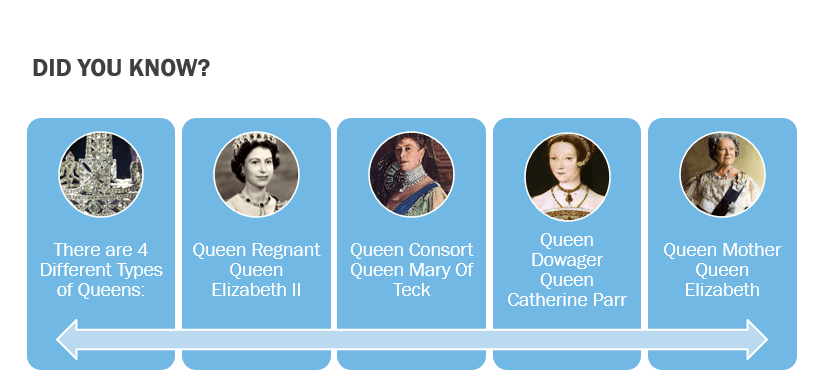
  • After doing research and understanding the roles and responsibilities behind a Queen, I’ve come to notice that she has separated roles solely based off of her title. So when it comes to their roles, I have found 4 different types of Queens: Queen Regnant, Queen Consort, Queen Mother, and Queen Dowager. There are some similarities but major differences. Let’s take a look into the dynamics of Queen titles and duties.

    A lot of historians can find this awareness rather “old news”. Others, may just be getting started in their historical journey to find out who is who, and I’m here to share it.
    Queen Regnant
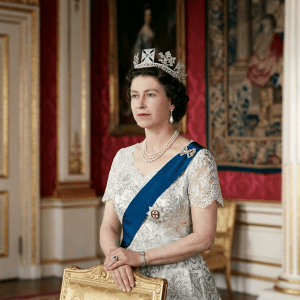
    Queen Elizabeth II wearing a jeweled crown, pearl necklace, blue sash, and white gown in an ornate room
    Queen Elizabeth II

    Let’s start off with whom I feel is the most prominent, carrying the most responsibilities of them all. The Head of State, The Heir, the Queen Regnant. From the picture above I have our most recent Queen, Queen Elizabeth II for example. A Queen Regnant is the one who is next in line or heir to the throne. For her story, Queen Elizabeth II was next in line to the throne after her father King George VI. Originally her uncle, King Edward VIII was set to be King, but did not make it to his Coronation due to marrying Wallis Simpson. Ms. Simpson a women that was twice divorced (which was a big no-no back then)! Since he had no children or heirs, Edward VIII served from January of 1936 and abdicated the throne in December of 1936. His brother George was next in line to be King and served from 1936 to 1952. King George VI died due to coronary thrombosis.

    From 1952 to 2022 is Queen Elizabeth II, serving and outstanding 70 years as Monarch, making her the longest serving monarch in history! Just like the Queen’s before her, such as Queen Victoria who served 63 years, and Queen Elizabeth I who served 42 years, Elizabeth II has it in her bloodline and within her right to carry the torch as Queen Regnant. The chances of a Queen to rule by bloodline does not come as often as a King. Ironically, it is a Queen who has reigned the longest.

    Duties & Responsibilities

    • DUTY: It is the duty of the Queen to represent and become an important symbol of her country during her reign. She must uphold the highest standards for services towards her community, give awards, and have an important role in philanthropy.
      Once a former King or Queen passes, instantly comes the servitude of the next Monarch by Coronation ceremony. It is the official initiation of a Queen with promises to serve their country, have their anointing, as well as abide by laws. Annually, the Queen attends the Opening of Parliament. This ceremony introduces a new year for the Sovereign, House of Lords, and the House of Commons. Another annual ceremonial service is the Trooping the Colour, or a parade for the Monarch. This display is gathered in front of thousands of their loyal subjects; with the Queen on her horse, supported with military troops, and ending off with an exciting fly over performance by the Air Force.
    • RESPONSIBILITY: As Queen Regnant, having the highest role, will come with responsibilities. Having this role takes on not only the crown, but a position that has been passed down from generation, to generation. Their duties are as “Head of State”. This level of hierarchy gives the opportunity for the monarch to advise, guide, and give encouragement to government. However, being the Head Of State, a Queen does not bow towards an opinion when it comes to government. Nor is she above the law. This decision was made long ago back in 1215: “The Magna Carta”.
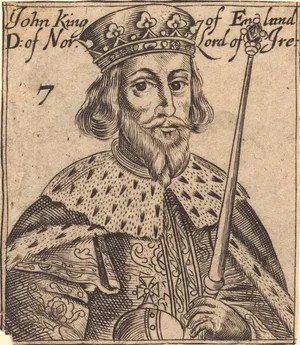

    This principle came into action after King John of England in 1215, stating that:
    “the king and his government was not above the law. It sought to prevent the king from exploiting his power, and placed limits of royal authority by establishing law as a power in itself.”

    This chartered documentation include key factors such as Rule of Law, Due Process, Limitations on Taxation, and Foundational Impact. It was a system to give fairness to the barons and nobles.

    After the act of the Magna Carta, follows the Bill of Rights and the Claim of Right Act in 1689, and the Act of Settlement in 1701. These forms of legislation restricted full power to the monarch from abuses of power. Let’s face it, having this type of power can cause destruction. Having a parliament is better than to leaving it in the hands of one person.

    Queen Consort
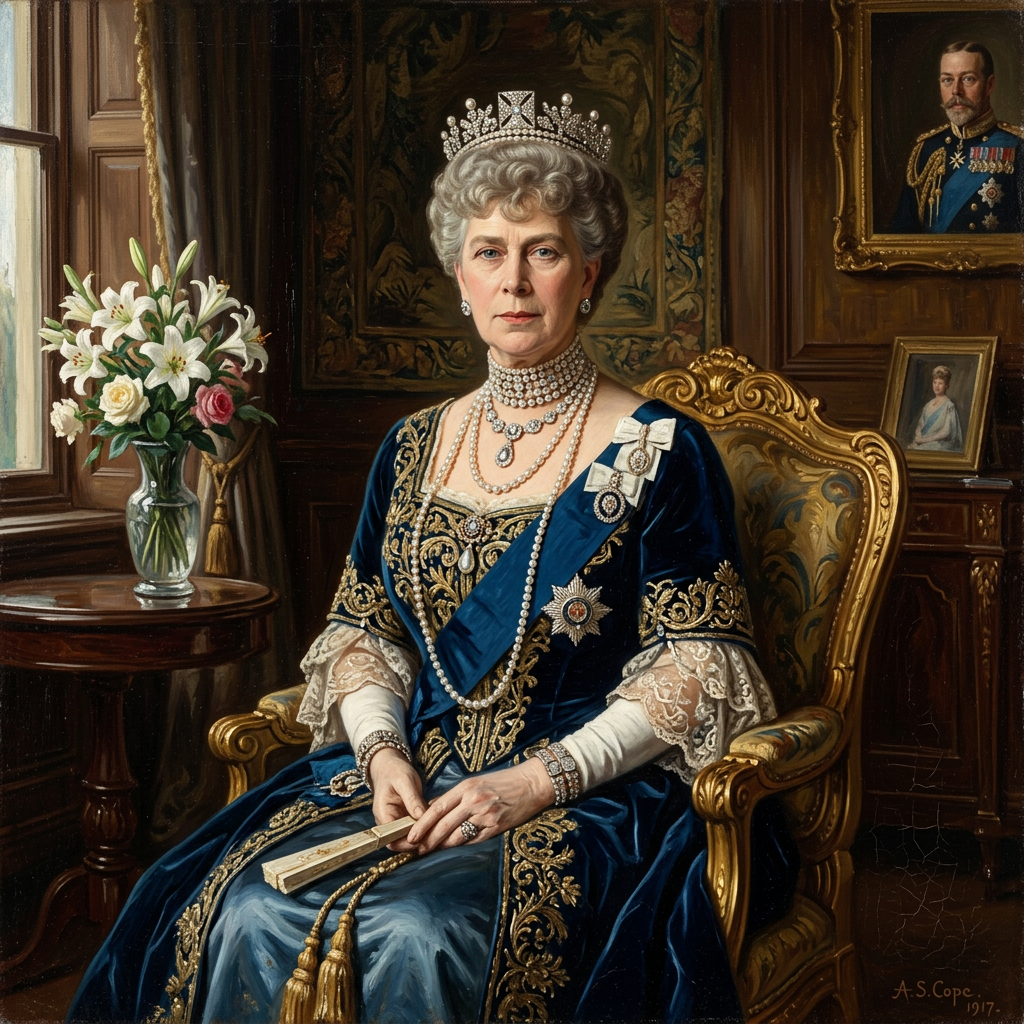
    Queen Mary seated in ornate chair wearing blue velvet gown, tiara, and pearl necklaces holding a fan
    Queen Mary of Teck

    Now the Queen Consort is just as important as the Queen Regnant, but not so much in responsibilities. She too is also apart of the Monarchy along side of her husband the King. A Queen Consort is someone who is married into the Royal Family and also given a coronation with the King. Throughout history it was an arranged marriage from another country to carry power and prestige. From the example above I chose Queen Mary of Teck. She is in fact the grandmother of Queen Elizabeth II, and was wife to King George V. Her father Francis, Duke was Teck was born in Esseg, Slavonia, which he is of Croatian descent. The relationship was rather common to obtain, since Mary’s mother Mary Adelaide of Cambridge was the first cousin to Queen Victoria.

    Duties & Responsibilities

    • DUTY: Queen Consorts carry the duty of being the companion of the King. Her assistance is to help in ceremonial events, as well as having to support the children in education, and staff management. She too has public appearances with the King, and philanthropic activities she attends. Having heirs gives the Queen Consort a rise in not only prestige, but respect. She is signified as a healthy Queen, who is standing by the side of her husband, and supports him in every way.
    • RESPONSIBILITY: The duty of a Queen Consort is more important reputation to have than responsibility. For she has a little to no responsibility as Consort. Only her husband has power and responsibility over the country. But dressing up and attending ceremonies would make her job a little easier, wouldn’t you think?

    Queen Mother
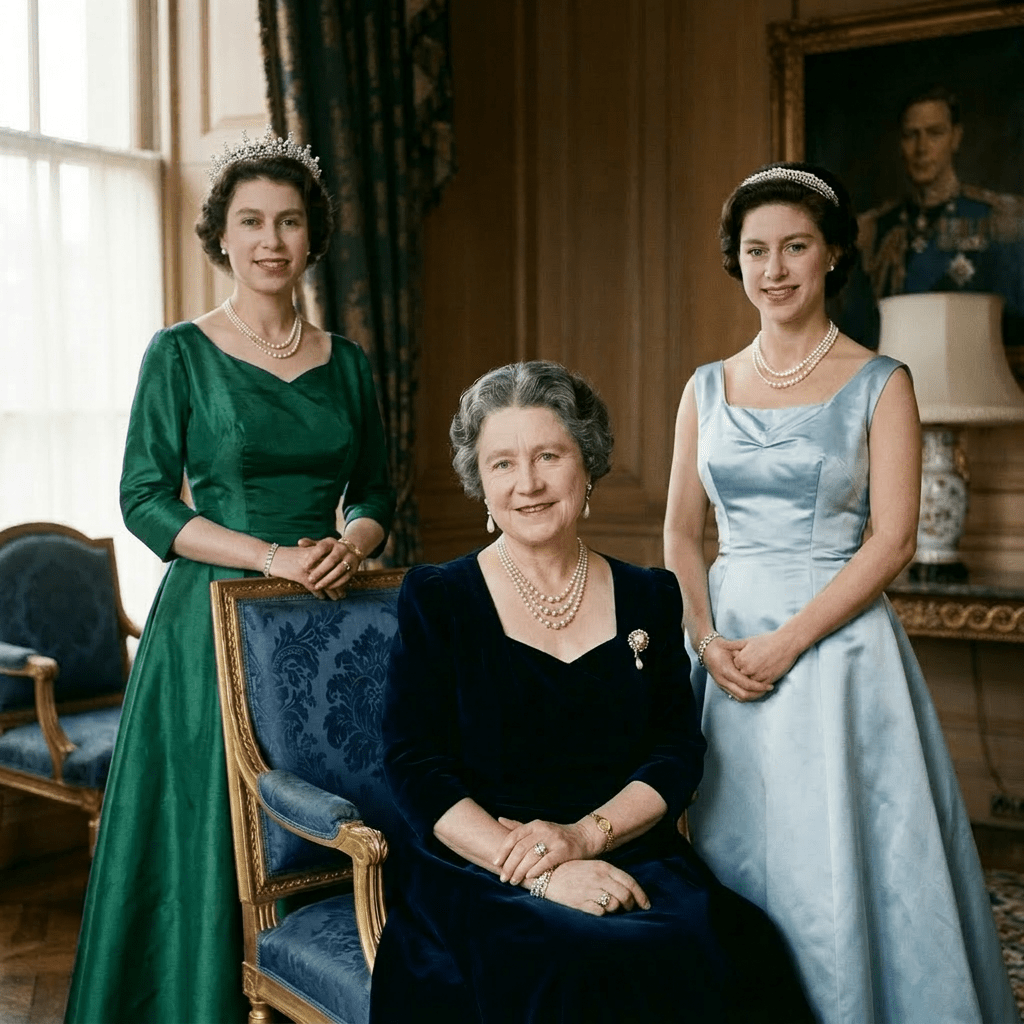
    Three British royal women in formal gowns and jewelry posing indoors
    Sitting: Queen Elizabeth Queen Mother, standing left: Elizabeth II, standing right: Princess Margaret.

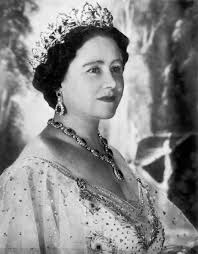
    I would say I had a little bit of overthinking with this position of when and where to place the Queen Mother, or the Queen Dowager, for they are relatively the same, but still have their differences. A Queen Mother, is a women who was married to a King as Queen Consort, but once the King passes and she is the mother to the heir (very important) she then becomes the Queen Mother. The perfect example is Queen Elizabeth II’s mother Elizabeth Bowes-Lyon. She was the wife of King George VI, and mother to Elizabeth and Margaret.

    Duties & Responsibilities

    • DUTY: As the Queen Mother, it is her role to perform official visits, holding patronages for hundreds of organizations, providing stability, and sustaining the monarchy’s public image. She is the one that guides the Monarch within the compass of the realm.
    • RESPONSIBILITY: The Queen Mother participates in charity works, patronages, public engagements, and many other respectable honors in part of the Royal Family.

    Queen Dowager
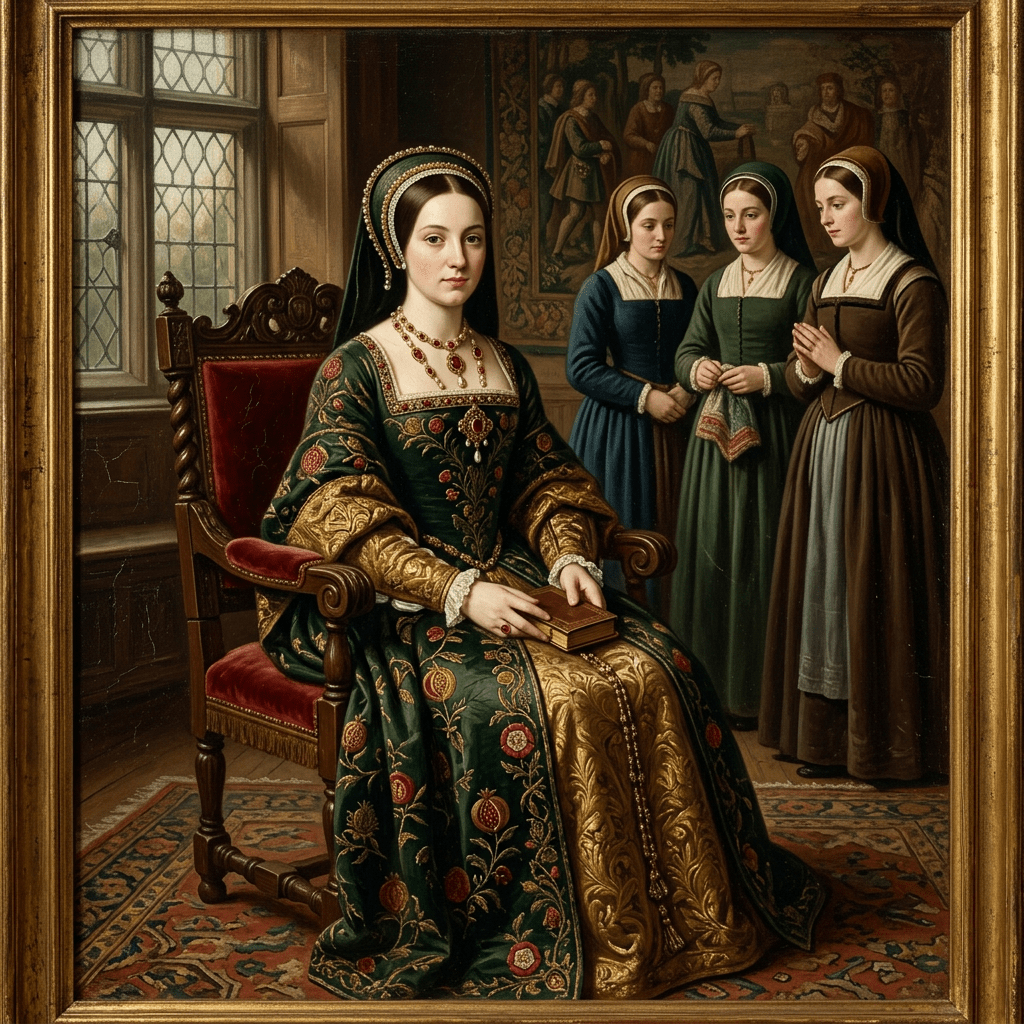
    Noblewoman wearing green and gold embroidered dress sitting on an ornate chair holding a book with three women standing behind her
    Queen Dowager Catherine Parr

    Being a Queen Dowager is one who is the wife of the King, but the King has died, but the wife does not have her own child as heir. Catherine Parr, known as the 6th and last wife whom ‘survived’ from many of King Henry VIII’s marriages. After the King died, Queen Catherine still had her title, but his oldest daughter Mary, became Queen, and the first Queen by blood (or Regnant) of England and Ireland, and Spain. The dynamics of rank drastically changed once Mary became Queen, as Catherine Parr’s responsibilities were fully reduced, given 7,000 euro as Dowager and into retirement.

    Duties & Responsibilities

    • DUTY: The Queen Dowager, although is not the mother to the heir, still is active when it comes to supporting the monarch, public duties, and patronages.
    • RESPONSIBILITY: If in fact the heir is too young to rule, the Queen Dowager would stand as ‘Regent’, not confusing with “Regnant”. One close example was Queen Mary de Guise, who although was mother of Mary Queen Of Scots, was also a widow of King James V, and became Regent due to Mary beginning the start of her role at 6 days old in 1554.


    References:

    https://www.nationalarchives.gov.uk/education/resources/magna-carta/british-library-magna-carta-1215-runnymede/
    https://www.britroyals.com/windsor.asp?id=mary_teck
    https://www.royal.uk/encyclopedia/queen-elizabeth-the-queen-mother#:~:text=After%20the%20King’s%20death%2C%20The,President%20of%20some%20350%20organisations.
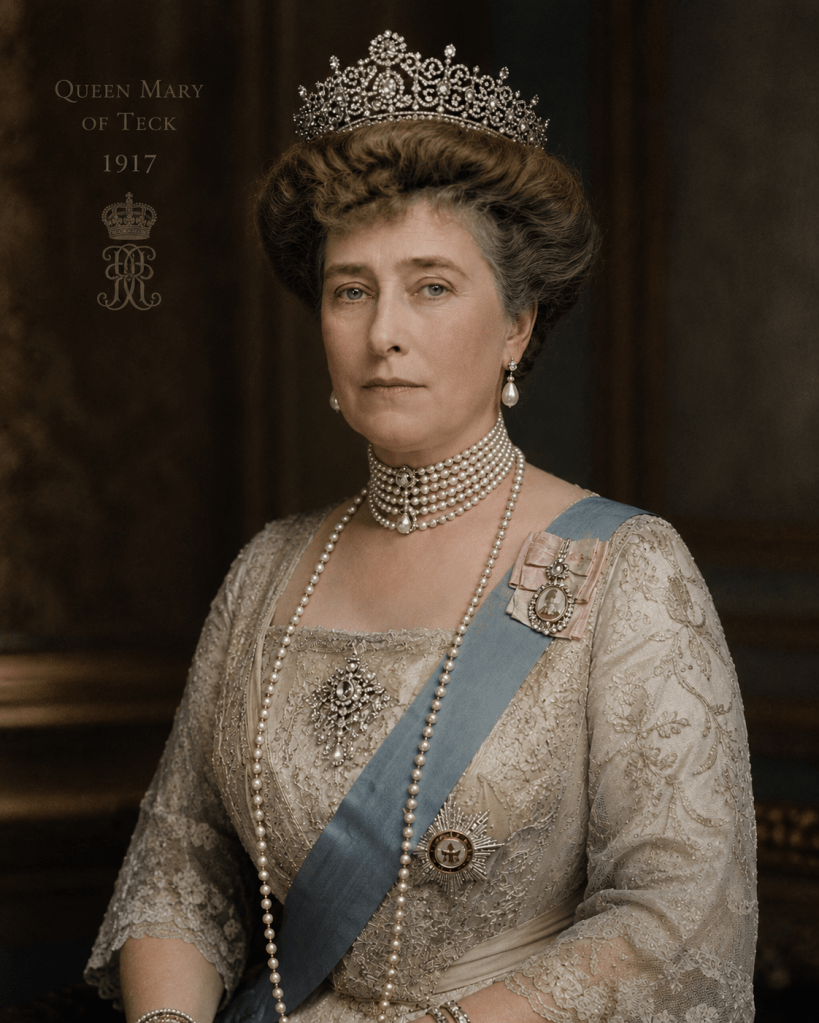
  • (r.1910-1936)

    Mary of Teck served as Queen Consort alongside her husband King George V from May of 1910 to January of 1936. She is the daughter of Francis of Teck, and Mary Adelaide of Cambridge. She is also the great-granddaughter of King George III.

    She was set to marry Prince Albert Victor, Duke of Clarence, but passed away before the marriage exchange in 1892. She then later married Queen Victoria’s other son George, who was second in line to the throne. The two became wed in 1893.

    She was considered the Queen who changed the image and significance of the “House of Windsor.” Looking into the travel glass, during a difficult era of WWI, Germany and Great Britain faced many challenges. It was a moment to choose who showed the most loyalty. It was also a time to determine how to keep the Royal Family from crashing and burning.

    The Queen helped to make it clear to cut ties with Germany, and to disassociate in the Russian Revolution; and their name was changed from Saxe-Coburg and Gotha, to Windsor. To this today that last name still remains with King Charles III.

    Queen Victoria Mary of Teck died in 1952, just 10 weeks before her grand daughter Elizabeth II’s coronation.

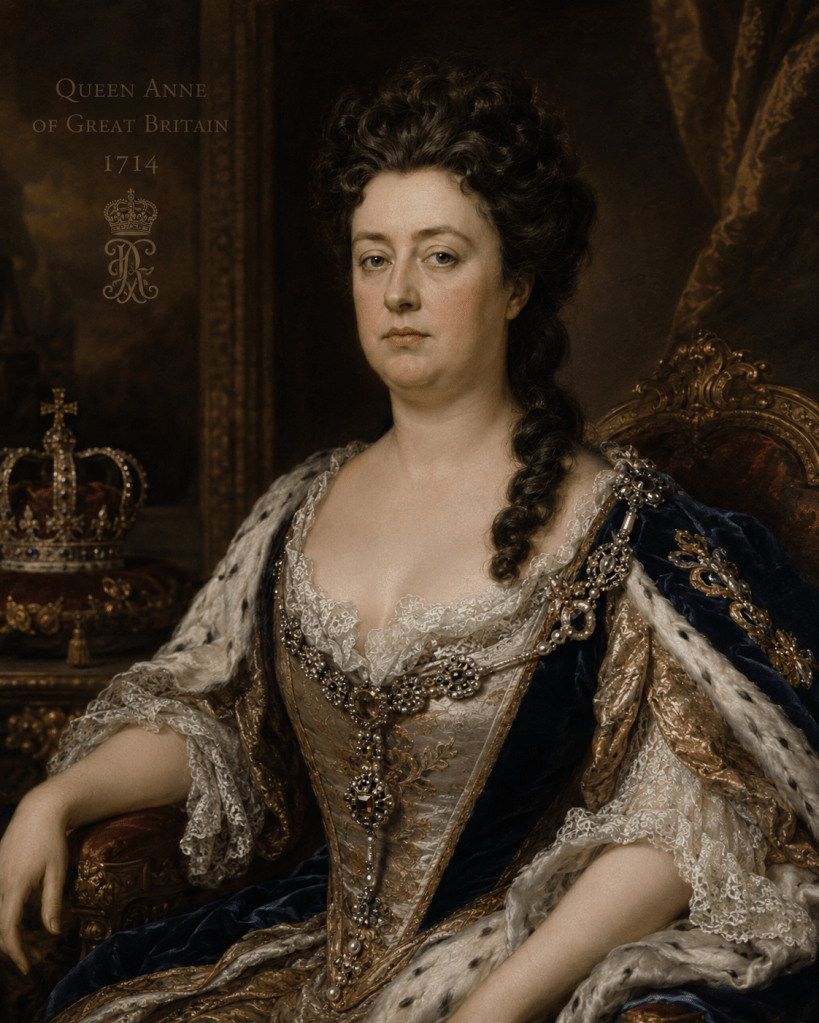
  • (r. 1702-1714)

    Queen Anne became Monarch of England, Ireland, and Scotland in 1702 at the age of 37. She was the daughter of King James II, sibling to Queen Mary II, and cousin to King William III.

    Her personal life was rather difficult. Being that she was Protestant, and her sister Mary was Catholic, the differences in beliefs prevented her from much influence and instruction to power; being that she was next in line. She may have had a pleasant marriage with Prince George of Denmark and Cumberland, but was not able to have any surviving children. Queen Anne became pregnant 18 times, with only one surviving past infancy. After the childs passing in 1700, her hopes have an heir have become lost, and decided to continue the legacy through the Hanovarian family after her passing.

    Once her husband passed away, she gained a close relationship with Sarah Jennings Churchill, but was later dismissed being that the influence Churchill had on Anne, was apart of a campaign that she no longer agreed with.

    Anne dealt with many illnessess along prologned struggles with still births. She died in August of 1714.


    References:
    https://www.britannica.com/biography/Anne-queen-of-Great-Britain-and-Ireland
    https://en.wikipedia.org/wiki/Anne,_Queen_of_Great_Britain

  • (r. 1286-1290)

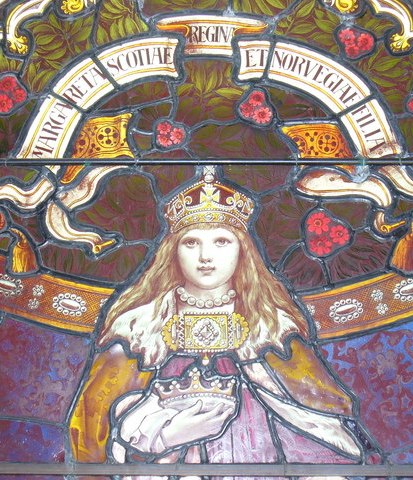
    Margaret, Maid of Norway, was born in 1283 and became the Queen of Scotland at the tender age of 3 years old after her grandfather, KIng Alexander III of Scotland died in 1286.

    During this time, her Guardians of Scotland were to insure that once she became older she would still hold her throne and were to marry Edward I. Not much was said about her reign due to her guardians and older members of her family,

    In 1290 Margaret was to set sail with protection to England for negotiations of marriage. However, during her journey, Margaret became very ill with possibility of food poisoning, and died in Bishop Narve’s arms at just 7 years old in the year of 1290.

  • English Coat Of Arms

    From the her Majesty The Queen to a Lady, titles have been with the British, Irish, and Scottish nobles for centuries; but what are the titles for? Also, why do titles appear to come off as confusing and/or misunderstood? I’m here to provide you with a full break down of titles with their roles and duties (whichever one you are interested in, you can scroll down until you find it) :)

    King & Queen

    I thought it would be best to start from the highest (and most familiar) Title and that is the King and Queen. There is only one type of King, but two types of Queens:

    King George VI, Father of Queen Elizabeth II and Former King of United Kingdom and Ireland

    The role of the King or Sovreign is considered as the leader and ruler of the people or country. There was a time when the Monarchy had power over politics of the country, but after the Magna Carta of 1215, the sovreign must have legal descisions approved by council or what we call today, a parliment. The King is a symbolism of the head of state. The Head of Government however, is the Prime Minister.

    Queen Regnant

    Queen Consort

    Queen Victoria
    Queen Elizabeth The Queen Mother

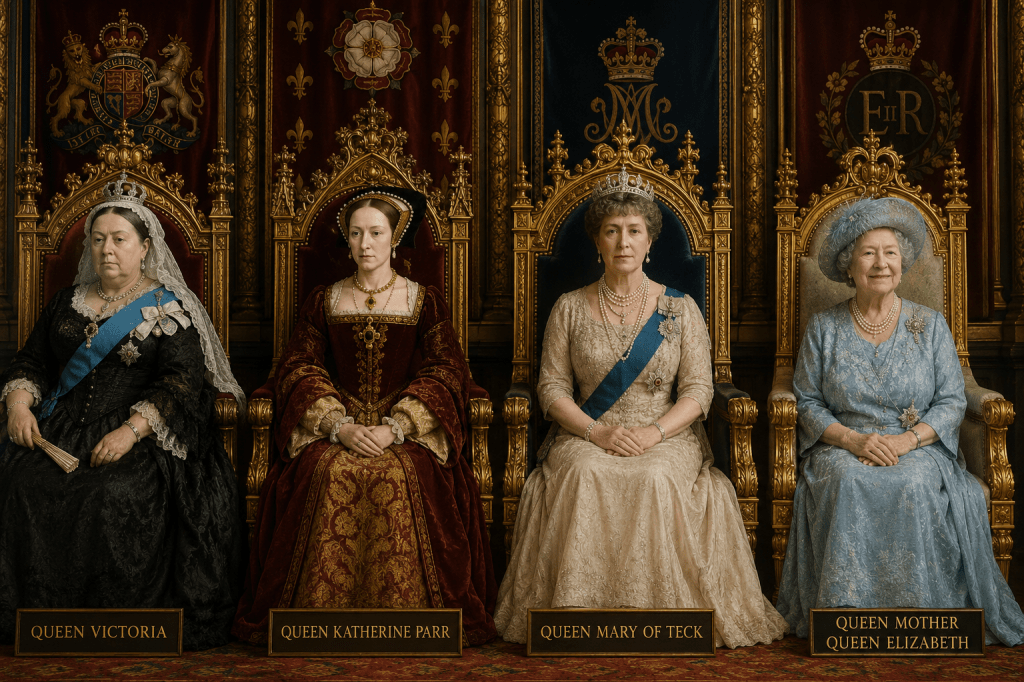
    As noted earlier, there are 2 different types of Queens (well, actually 4, but I’ll get to that part in a moment, and why I said 2). To your left, you see Victoria as Queen Regnant, meaning she is the queen in her right as deserving by blood line. Women were never absent from the role of taking the throne, but since religion and family played a big factor during these times, it was intended and hoped for men to take the throne. To your right, to see Queen Elizabeth The Queen Mother (Queen Elizabeth II’s mother) as Queen Consort, meaning she was married to a King. If the King dies before the Queen Consort, then she is considered as Queen Dowager. In this particular instance, Elizabeth has witnessed her husband die, and her daughter Elizabeth II to become queen, which also gives her the name as Queen Mother (see how that works?)

    Duke & Duchess

    Now you might think that I would have put Prince & Princess next here, but….let me explain. The Duke is the highest in ranking next to the King or Queen, whichever is on the throne. This title can be earned by the King or Queen. There is another Title named Grand Duke or Arch Duke before the title Duke, but here we’re only referring to Duke. A Duchess is a woman who is married to a Duke for her to earn her title. Remember, since the roles in the Medival stages (when Dukedom started, 1337) honored the man, A Duke cannot earn a title by marrying a woman that was already a Duchess. Dukedom does not have to be an inhereted title.

    Prince & Princess

    Prince Albert of Sax-Coburg

    A Prince is an inhereted title from whomever is on the throne by blood. Usually, it is the next in line to the throne if they are the first born; but it wasn’t until the Perth Agreement in 2015, allowed the next sibling (whether male or female) to become next in line of succession (if the first born does not have chidren). Here, you can see Prince Albert was already a Prince, but once he married Queen Victoria, he became Prince Consort. You may ask yourself “Well why wasn’t he a King Consort if he married a Queen?” Victoria wanted her husband to become King Consort, but her council would not allow him because of where he was from (Germany). There are some perks however; if a Prince marries a queen, he has a higher ranking than his children (Hence Prince Philip, Duke of Edinburgh). But if he is not around his wife, then his children rank higher than he does. The Duke and the Prince rankings somewhat intertwine with each other, depending on who their around. A Princess is also an inhereted title from either the King or Queen of royal blood. Her ranking also applies the same as a duchess. A princess can marry, but her husband will not become a prince. Another ranking for a princess is a Princess Royal, which is the first born girl of the royal family.

    Victoria, Princess Royal. Oldest and 1st born girl of Queen Victoria and Prince Albert

    Marquess & Marchioness

    These two titles may have not really been talked about, but that is why you’re reading this now! The Ranking of the Marquess (Mark-Key) is lower than a Duke, and their role was to protect the Monarchy of any potential enemies throughout the United Kingdom. A Marchioness (Mar-Shuness) is a woman or a widow of a Marquess earning her right to this particular title. She too is a ranking below a duchess.

    Earl & Countess

    An Earl held the title with more control over land and finances. They are the ones who keep track of any debts and taxes that needs to be collected if they had land being used for tenants. This title can be earned by King or Queen, and by inheretence. A Countess or Lady is a title by marriage to an Earl. She would have to earn this title by marriage (I hope you are noticing the pattern on how the women earn their titles!) Also, if the father is a Duke, the titles descends from there (Duke, Marquess, Earl, Viscount, Baron, etc.), until the father passes, then the older son becomes a duke.

    Viscount & Viscountess

    For A Viscount, you would consider their role as a Lietenant or deputies in in control of delegations. This title is normally earned by inheritence his father is a Duke or even a King. A Viscountess of course is married or is a widow to a Viscount. She has earned her right as such, and is Also called a Lady.

    Baron & Baroness

    This may be one of rankings towards the bottom, but still has significant roles. A Baron is what you would call “loyalty for land”. This means that he pledges loyalty to the throne and in return is given land that he can pass down to his children. A Baroness Title is earned once married, but is very responsible within her Barony. In Government today, there are Baroness’ joined together with the Barons under The House Of Lords. 

    Knight & Dame 

    A Knight is there to protect the lands of the monarchy as a warrior and able to withstand long days at war. A Dame is the wife of the Knight, or a member of knighthood.

    Esquire

    An Esquire is responsible for the land of the Knight, but not yet a Knight himself. Today it is more used at the end, or no significance at all. Others use it if they’re practicing Law. However, if you want to know the best social status? Esquires.

    Lord & Lady

    This is the lowest ranking throughout nobility, but just as familiar as the King & Queen (interesting right?) In the Medieval days, a Lord or Gentlemen obtains the role of all the land that surrounds him. Owned a high responsibility. Today this role is established under Government through Parliament. A Lady is a woman that not only is married to a Lord, but considered as a personal assistant to Royalty. She is also called a Lady-In-Waiting.

  • Although this is Queen’s blog page I was compelled and inspired to write to you guys about my thoughts and a little bit of fun facts on what it would be like to live in time, date, and year of March 16th 1821. For some odd reason lately, I repeatedly kept seeing the number 316. From what I understand of it, it means to love yourself as well as others, and to become more creative and evolve with your craft (hence the writing today).

    Hm, lets see.. 1821. That’s 16 years before Victoria became Queen of England (16? 3 1 6?) . Slavery was still legal in the United States (but illegal in Mexico), and the industrial era with factories, scientists, and inventors was growing more by the day.

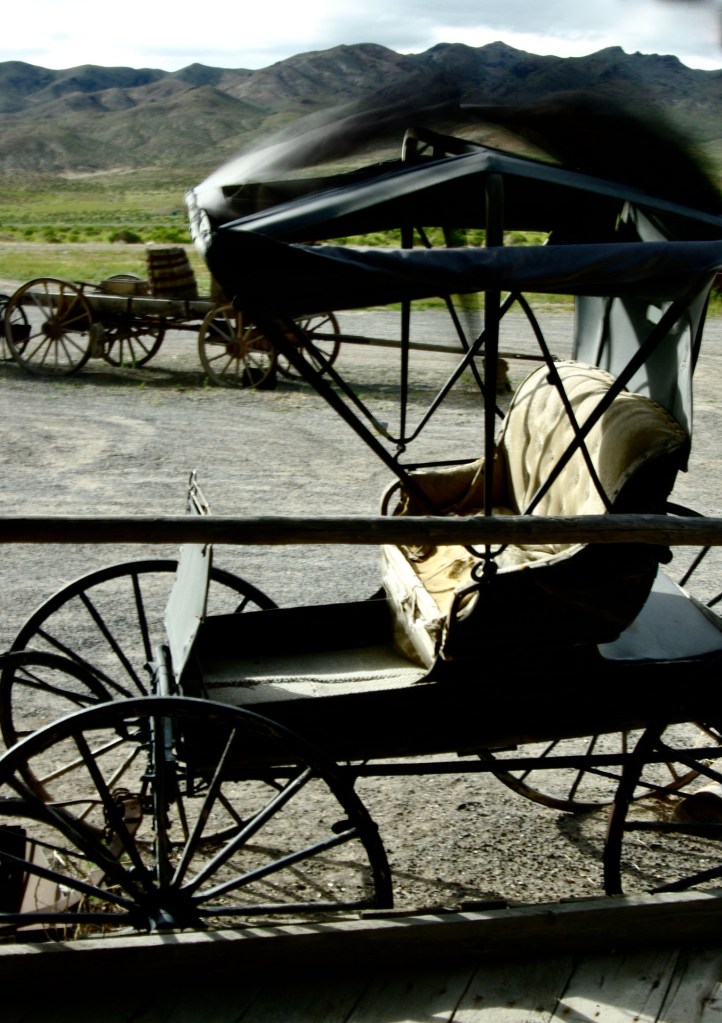
    With that being said, what exactly would I see or what could I see during this time? I don’t really know, but using my imagination I would say I’d see cabins as homes, and inside the kitchen has wooden counter tops, a square sink with a bucket of water inside, dishes to my right, candles every where, and an icebox to keep the food cool. I would see in the living area placed with a wooden coffee table, a white blanket on the left side of the dark blue couch, and once I sit down I’m facing the fire place with fresh wood inside. Outside would be an Outhouse made from the ground up (please don’t imagine the smell!). Over the horizon you see a black streak across the sky from the town 2 miles away in a random but prominent named town like “City Of Jamestenson”. As I make my journey and arrive to Jamestenson (let’s say I’m on a horse and carriage), my first stop is to go to the retail store and see the dresses! I would come across something like this:

    High waistline, broad shouldered, silk dress with its own authentic design. This store is filled with different designs, styles, and colors. Store owner is welcoming and sells me the dress for $10.00 ($224.00 today… wow). I leave the store and across the street I see a beautiful park with kids playing and feeding the birds. To my right up ahead I see the newest factory that struck their 12:00PM bell for lunch. I have no idea what they produce, but I hope it’s beneficial for the future! Right before I leave the city, I’m over towered by an amazing university with the engravement of “University Of Jamestenson 1760” viewed with windows gallore and a statue of President James Monroe (ha! I just made the city name up!). As I move further along from the dirt roads to the bay, I see travellers stepping on to the ramp to get on the ships for their journey across the ocean to go days to their new home in a new country. Men with their high-top hats and blue/black suit, checking the time on their gold pocket watch with white gloves, takes a deep breath, and proceeds to wait.

    Since its nice and cool, yet sunny and warm, a farm up ahead. The men share cropping, with brown and cream colored straw hats, freshly shaved black beard, white vest, black suspenders, and gray pants, and brown boots, pushing faster on a nice day. Women picking off the cotton with blue garden gloves, while dressed in white or blue, the bell of the dresses are flared enough to catch the wind, and their hats are tied to their chin while singing harmoniously. Further travelling, I reach a much smaller town named “Ides” (Like The Ides of March). Down the main road, a woman is holding a basketful of dried clothes from the clothes line heading inside their yellow house, horses pulling crates of moonshine to the nearest warehouse, and mail carriers riding as fast as they can to Jamestenson, the carriage had to move over since there were no stop signs until 1915.

    Ending my day with this marvelous journey back in time to 1821 (with help of an imagination), I wrote in my journal of the past. What I saw, how everyone spoke, the styles of suits and dresses, the entertainment of theater and dance, travel, natural grown food, products, and resources, and different types of labor. I really believe this is one of my favorite times of history to look back on because of the way things naturally were. If I could create my own world, it would be here. 1821.

    References:


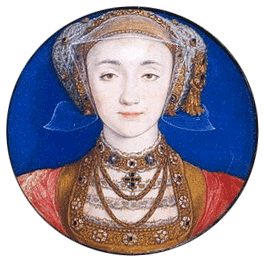
  • Queen Anne Of Cleves, or Anne (enter full name),(r. 1540-1540)was the 4th wife of the infamous King Henry Tudor VIII during the Renaissance Era. Unfortunately, their marriage only lasted a mere 6months (January 6 – July 9th, 1540), due to his unattractiveness to her, and a liking to another woman most are familiar with,

    Being the 4th wife of the King’s pattern, she was given a divorce, but since the King felt a little regret, he decided he wanted her to stay in the area of Richmond, quietly receiving 4,000Euros a year, her title as the Queen of England was renounced, She also witnessed King Henry’s fifth and sixth marriage and coronation of Queen Mary. The Queen died on the 28th of July 1557 at Chelsea, and was buried in Westminster Abbey.

  • Follow our Social Media Platforms on Twitter and Instagram!!

    Twitter; @queens_british
    Instagram: @british.queens

  • Elizabeth I ruled during the vibrant Renaissance era, a time overflowing with music, dance, artistic brilliance, and cultural innovation. Among the many talented artists who flourished within the English court was the remarkable painter Levina Teerlinc, whose work helped shape the artistic legacy of the age.

    Levina Teerlinc was known as a “miniaturist” painter for the Royal family including Henry VIII, Edward VI, Mary I, and Elizabeth I. She practiced a form of creating smaller paintings; a style made for lockets, pendants, and necklaces. According to My Daily Does of Art, “Teerlinc is credited with inventing the oval shape for the miniature portrait. Prior to the oval shape, these tiny portraits came only in rectangular shapes.”

    View Source

     Levina was not the only painter allowed at court. A man named Nicholas Hillard practiced the miniaturist painting style as well. “His earliest known attempts at miniature painting were made in 1560, and his talent is obvious in Self Portrait Aged 13 and Edward Seymour, Duke of Somerset. Hilliard became miniature painter to Queen Elizabeth I about 1570 and made many portraits of her and of the leading members of her court.” – Britannica

    There are plenty other artists that painted for the Elizabeth I including George Gower, Robert Peake The Elder, Quentin Metsys, Steven Van der Muelen, and William Segar. Teerlinc was also allowed as privy council under Elizabeth I, gained a starting salary of 40 pounds ($ 55 in USD), and her paintings were considered ““a Carde with the Queen’s Matie [Majesty] and many other personages” – Being Bess. Although she did not sign her paintings, she is signified as one of the best painters for the Tudor family, and some of her work is sometimes hard to recognize in this present day from the other painters.

    References;

  • (r. 1553-1558)

    Mary Tudor or Queen Mary I, held her reign for a short moment from 1553 to 1558. She was the daughter of King Henry VIII, and Queen Catherine Of Aragon. Mary was also the first queen of royal succession to the English Throne.

    Mary went through difficult times in her life, from becoming the Kings princess, to a lady-in-waiting, she felt that all the odds were against her. Luckily her brother King Edward VI decided to bring back to the Royal Court with another opportunity to gain her initial birth right to the thone. Having Edward die at a young age, Mary became Queen in 1553. Due to her decline in health, and troubled marriage from a false pregnancy producing an heir, Mary died at the age of 42, making her half sister, Elizabeth reign Queen.