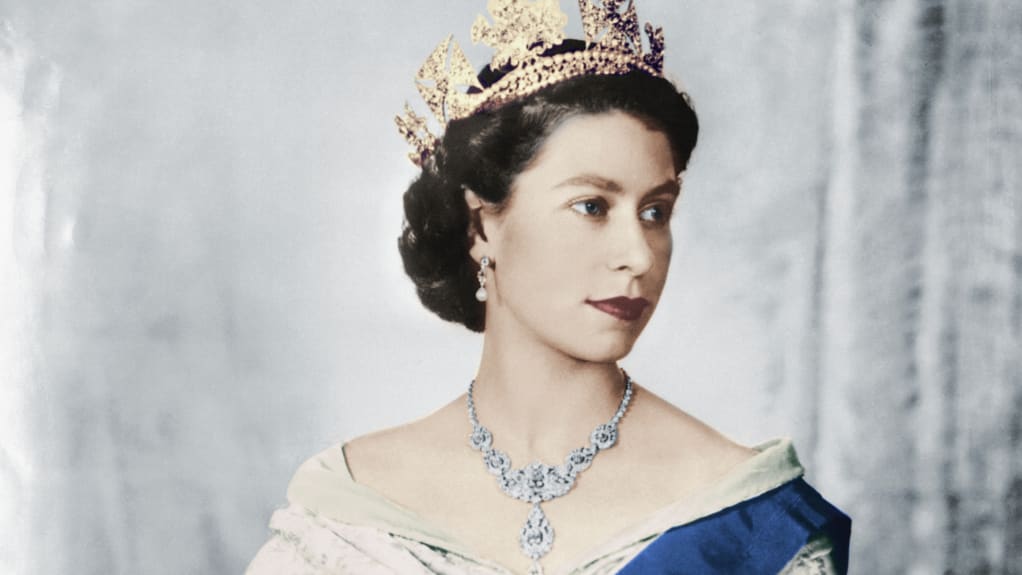
• Royal Titles: From King to Lord

    English Coat Of Arms

    From the her Majesty The Queen to a Lady, titles have been with the British, Irish, and Scottish nobles for centuries; but what are the titles for? Also, why do titles appear to come off as confusing and/or misunderstood? I’m here to provide you with a full break down of titles with their roles and duties (whichever one you are interested in, you can scroll down until you find it) :)

    King & Queen

    I thought it would be best to start from the highest (and most familiar) Title and that is the King and Queen. There is only one type of King, but two types of Queens:

    King George VI, Father of Queen Elizabeth II and Former King of United Kingdom and Ireland

    The role of the King or Sovreign is considered as the leader and ruler of the people or country. There was a time when the Monarchy had power over politics of the country, but after the Magna Carta of 1215, the sovreign must have legal descisions approved by council or what we call today, a parliment. The King is a symbolism of the head of state. The Head of Government however, is the Prime Minister.

    Queen Regnant

    Queen Consort

    Queen Victoria
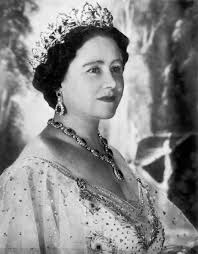
    Queen Elizabeth The Queen Mother

    As noted earlier, there are 2 different types of Queens (well, actually 4, but I’ll get to that part in a moment, and why I said 2). To your left, you see Victoria as Queen Regnant, meaning she is the queen in her right as deserving by blood line. Women were never absent from the role of taking the throne, but since religion and family played a big factor during these times, it was intended and hoped for men to take the throne. To your right, to see Queen Elizabeth The Queen Mother (Queen Elizabeth II’s mother) as Queen Consort, meaning she was married to a King. If the King dies before the Queen Consort, then she is considered as Queen Dowager. In this particular instance, Elizabeth has witnessed her husband die, and her daughter Elizabeth II to become queen, which also gives her the name as Queen Mother (see how that works?)

    Duke & Duchess

    Now you might think that I would have put Prince & Princess next here, but….let me explain. The Duke is the highest in ranking next to the King or Queen, whichever is on the throne. This title can be earned by the King or Queen. There is another Title named Grand Duke or Arch Duke before the title Duke, but here we’re only referring to Duke. A Duchess is a woman who is married to a Duke for her to earn her title. Remember, since the roles in the Medival stages (when Dukedom started, 1337) honored the man, A Duke cannot earn a title by marrying a woman that was already a Duchess. Dukedom does not have to be an inhereted title.

    Prince & Princess

    Prince Albert of Sax-Coburg

    A Prince is an inhereted title from whomever is on the throne by blood. Usually, it is the next in line to the throne if they are the first born; but it wasn’t until the Perth Agreement in 2015, allowed the next sibling (whether male or female) to become next in line of succession (if the first born does not have chidren). Here, you can see Prince Albert was already a Prince, but once he married Queen Victoria, he became Prince Consort. You may ask yourself “Well why wasn’t he a King Consort if he married a Queen?” Victoria wanted her husband to become King Consort, but her council would not allow him because of where he was from (Germany). There are some perks however; if a Prince marries a queen, he has a higher ranking than his children (Hence Prince Philip, Duke of Edinburgh). But if he is not around his wife, then his children rank higher than he does. The Duke and the Prince rankings somewhat intertwine with each other, depending on who their around. A Princess is also an inhereted title from either the King or Queen of royal blood. Her ranking also applies the same as a duchess. A princess can marry, but her husband will not become a prince. Another ranking for a princess is a Princess Royal, which is the first born girl of the royal family.

    Victoria, Princess Royal. Oldest and 1st born girl of Queen Victoria and Prince Albert

    Marquess & Marchioness

    These two titles may have not really been talked about, but that is why you’re reading this now! The Ranking of the Marquess (Mark-Key) is lower than a Duke, and their role was to protect the Monarchy of any potential enemies throughout the United Kingdom. A Marchioness (Mar-Shuness) is a woman or a widow of a Marquess earning her right to this particular title. She too is a ranking below a duchess.

    Earl & Countess

    An Earl held the title with more control over land and finances. They are the ones who keep track of any debts and taxes that needs to be collected if they had land being used for tenants. This title can be earned by King or Queen, and by inheretence. A Countess or Lady is a title by marriage to an Earl. She would have to earn this title by marriage (I hope you are noticing the pattern on how the women earn their titles!) Also, if the father is a Duke, the titles descends from there (Duke, Marquess, Earl, Viscount, Baron, etc.), until the father passes, then the older son becomes a duke.

    Viscount & Viscountess

    For A Viscount, you would consider their role as a Lietenant or deputies in in control of delegations. This title is normally earned by inheritence his father is a Duke or even a King. A Viscountess of course is married or is a widow to a Viscount. She has earned her right as such, and is Also called a Lady.

    Baron & Baroness

    This may be one of rankings towards the bottom, but still has significant roles. A Baron is what you would call “loyalty for land”. This means that he pledges loyalty to the throne and in return is given land that he can pass down to his children. A Baroness Title is earned once married, but is very responsible within her Barony. In Government today, there are Baroness’ joined together with the Barons under The House Of Lords. 

    Knight & Dame 

    A Knight is there to protect the lands of the monarchy as a warrior and able to withstand long days at war. A Dame is the wife of the Knight, or a member of knighthood.

    Esquire

    An Esquire is responsible for the land of the Knight, but not yet a Knight himself. Today it is more used at the end, or no significance at all. Others use it if they’re practicing Law. However, if you want to know the best social status? Esquires.

    Lord & Lady

    This is the lowest ranking throughout nobility, but just as familiar as the King & Queen (interesting right?) In the Medieval days, a Lord or Gentlemen obtains the role of all the land that surrounds him. Owned a high responsibility. Today this role is established under Government through Parliament. A Lady is a woman that not only is married to a Lord, but considered as a personal assistant to Royalty. She is also called a Lady-In-Waiting.

  • If I Could Go Back To 200 Years Ago Today……

    Although this is Queen’s blog page I was compelled and inspired to write to you guys about my thoughts and a little bit of fun facts on what it would be like to live in time, date, and year of March 16th 1821. For some odd reason lately, I repeatedly kept seeing the number 316. From what I understand of it, it means to love yourself as well as others, and to become more creative and evolve with your craft (hence the writing today).

    Hm, lets see.. 1821. That’s 16 years before Victoria became Queen of England (16? 3 1 6?) . Slavery was still legal in the United States (but illegal in Mexico), and the industrial era with factories, scientists, and inventors was growing more by the day.

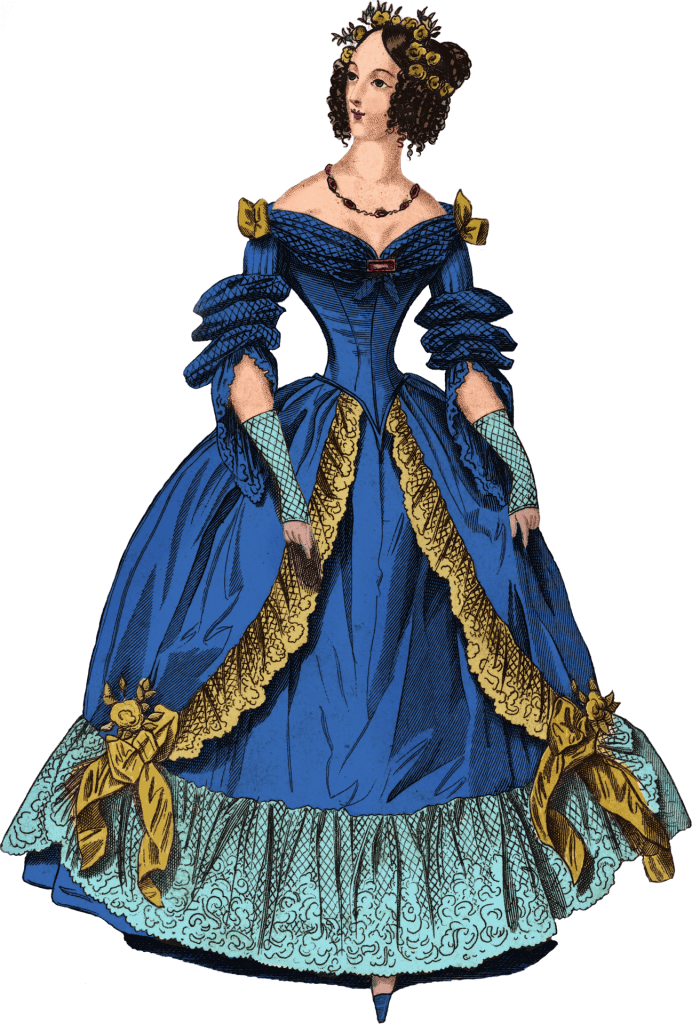
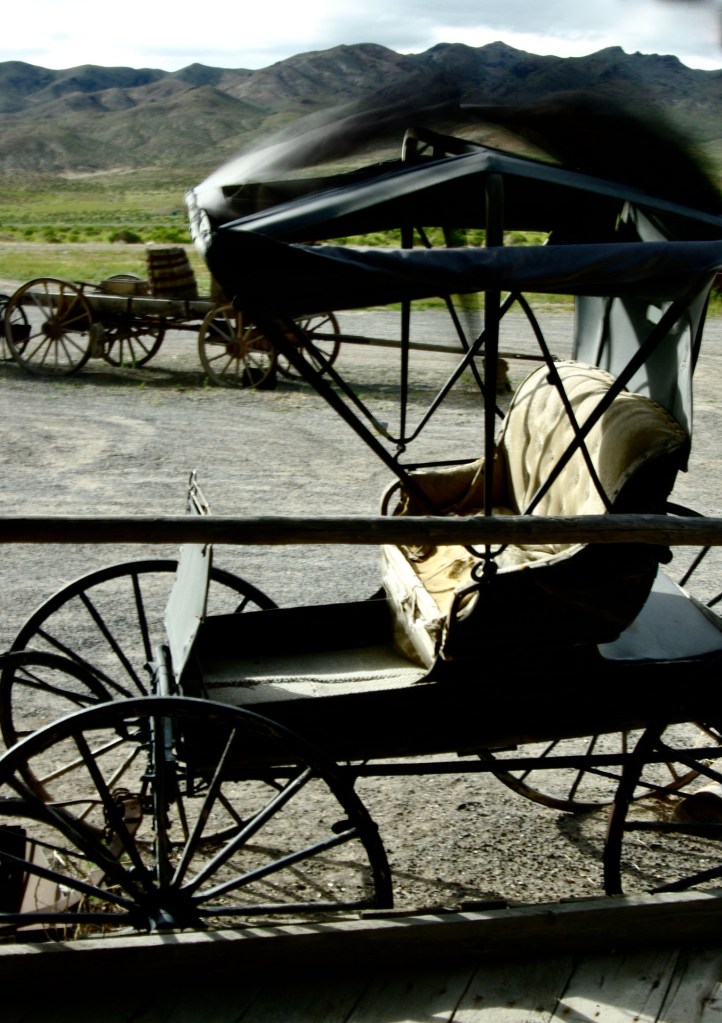
    With that being said, what exactly would I see or what could I see during this time? I don’t really know, but using my imagination I would say I’d see cabins as homes, and inside the kitchen has wooden counter tops, a square sink with a bucket of water inside, dishes to my right, candles every where, and an icebox to keep the food cool. I would see in the living area placed with a wooden coffee table, a white blanket on the left side of the dark blue couch, and once I sit down I’m facing the fire place with fresh wood inside. Outside would be an Outhouse made from the ground up (please don’t imagine the smell!). Over the horizon you see a black streak across the sky from the town 2 miles away in a random but prominent named town like “City Of Jamestenson”. As I make my journey and arrive to Jamestenson (let’s say I’m on a horse and carriage), my first stop is to go to the retail store and see the dresses! I would come across something like this:

    High waistline, broad shouldered, silk dress with its own authentic design. This store is filled with different designs, styles, and colors. Store owner is welcoming and sells me the dress for $10.00 ($224.00 today… wow). I leave the store and across the street I see a beautiful park with kids playing and feeding the birds. To my right up ahead I see the newest factory that struck their 12:00PM bell for lunch. I have no idea what they produce, but I hope it’s beneficial for the future! Right before I leave the city, I’m over towered by an amazing university with the engravement of “University Of Jamestenson 1760” viewed with windows gallore and a statue of President James Monroe (ha! I just made the city name up!). As I move further along from the dirt roads to the bay, I see travellers stepping on to the ramp to get on the ships for their journey across the ocean to go days to their new home in a new country. Men with their high-top hats and blue/black suit, checking the time on their gold pocket watch with white gloves, takes a deep breath, and proceeds to wait.

    Since its nice and cool, yet sunny and warm, a farm up ahead. The men share cropping, with brown and cream colored straw hats, freshly shaved black beard, white vest, black suspenders, and gray pants, and brown boots, pushing faster on a nice day. Women picking off the cotton with blue garden gloves, while dressed in white or blue, the bell of the dresses are flared enough to catch the wind, and their hats are tied to their chin while singing harmoniously. Further travelling, I reach a much smaller town named “Ides” (Like The Ides of March). Down the main road, a woman is holding a basketful of dried clothes from the clothes line heading inside their yellow house, horses pulling crates of moonshine to the nearest warehouse, and mail carriers riding as fast as they can to Jamestenson, the carriage had to move over since there were no stop signs until 1915.

    Ending my day with this marvelous journey back in time to 1821 (with help of an imagination), I wrote in my journal of the past. What I saw, how everyone spoke, the styles of suits and dresses, the entertainment of theater and dance, travel, natural grown food, products, and resources, and different types of labor. I really believe this is one of my favorite times of history to look back on because of the way things naturally were. If I could create my own world, it would be here. 1821.

    References:


  • The Forgotten Queen: Anne Of Cleves

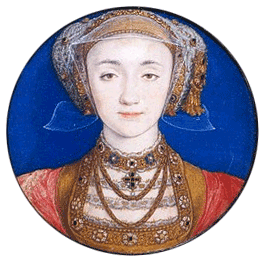
    Queen Anne Of Cleves, or Anne (enter full name),(r. 1540-1540)was the 4th wife of the infamous King Henry Tudor VIII during the Renaissance Era. Unfortunately, their marriage only lasted a mere 6months (January 6 – July 9th, 1540), due to his unattractiveness to her, and a liking to another woman most are familiar with,

    Being the 4th wife of the King’s pattern, she was given a divorce, but since the King felt a little regret, he decided he wanted her to stay in the area of Richmond, quietly receiving 4,000Euros a year, her title as the Queen of England was renounced, She also witnessed King Henry’s fifth and sixth marriage and coronation of Queen Mary. The Queen died on the 28th of July 1557 at Chelsea, and was buried in Westminster Abbey.

  • Whatever Happened to Queen Catherine?

    Catherine of Aragon was the first wife of Henry VIII. They produced and heir to the throne named Mary. Catherine faced many difficult birth attempts and had still borns (which could today leave a woman dealing with post-partum depression). However, Henry was deteremined to have a son, therefore he chose to go against the Catholic Priest and wanted to have their marriage annuled and desired another woman named Anne Boelyn. So whatever happened to Catherine after the divorce?

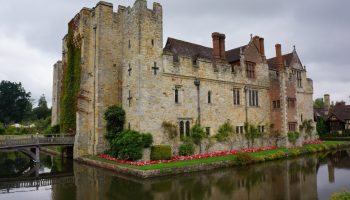
    In a sense, Catherine was booted out of the castle immediately and transferred many times until her and her daughter were placed at Kimbolton Castle.

    Her and her daughter Mary were to live in separate chambers of this castle and was not allowed to see or write letters to each other. Some sources say that there was compassion for the two, and some of the letters were able to be fully exchanged. Later, Henry wanted to offer Catherine a deal: To declare Anne Boelyn as Queen and in return have a better living quarters and able to see her daugther Mary. Both Catherine and Mary refused to accept this offer. Both went from Queen and Princess to ladies. If I would understand their feelings, I would feel betrayed. Catherine refused to return the jewels that are for the Queens, and still called herself the lawfully wedded wife of Henry VIII.

    As Catherine got older, she decided she wanted to write her Will. She wanted her nephew to protect her daughter. Sources say she wrote a last letter to Henry stating:

    My most dear lord, king and husband,

    The hour of my death now drawing on, the tender love I owe you forceth me, my case being such, to commend myself to you, and to put you in remembrance with a few words of the health and safeguard of your soul which you ought to prefer before all worldly matters, and before the care and pampering of your body, for the which you have cast me into many calamities and yourself into many troubles. For my part, I pardon you everything, and I wish to devoutly pray God that He will pardon you also. For the rest, I commend unto you our daughter Mary, beseeching you to be a good father unto her, as I have heretofore desired. I entreat you also, on behalf of my maids, to give them marriage portions, which is not much, they being but three. For all my other servants I solicit the wages due them, and a year more, lest they be unprovided for. Lastly, I make this vow, that mine eyes desire you above all things.
    Katharine the Quene.

    On January 7th of 1536, Catherine of Aragon died at the age of 50 In Kimbolton Castle.

    References:

  • Grace O’Malley

    (r. 1530-1603)

    Grace O’Malley or Gráinne Ní Mháille was born in 1530 in Umhaill, Connacht, Ireland. She was known as “The Pirate Queen”. She may not have had a crown, but she was a land owner, Chieftess, Sea Captain, and Political Activist. When she was a young adolescent, her father would not allow her to board ships due to her being a girl, however, Grace was so determined that she cut her hair to appear as a boy in order to get on the ship.

    Throughout her life and marriages she has had many losses, but gained her land overtime, and became the Captain after her father passed. She had a minor encounter with Queen Elizabeth I, running into a language barrier. Grace spoke Irish, and Elizabeth spoke English, but both were able to communicate in Latin. Since the English we’re owning more land of Ireland, Grace requested for her sons and half-brother to be released from prison, and Elizabeth granted her her wish. In turn she lost some of her land as it was never resolved.

    Grace was clever and charming, as well as intelligent, cunnig, and brave. Interestingly enough, she died the year of 1603.. The same year as Elizabeth I.

  • Social Media

    Follow our Social Media Platforms on Twitter and Instagram!!

    Twitter; @queens_british
    Instagram: @british.queens

  • Where Did The Dress Style Victorian Come From?

    Queen Victoria held her reign from 1837-1901, and during this time the changes inspired by her small stature, created an intricate, and elegant style from the Georgian Era (King George III, George Washington), and made it her own.

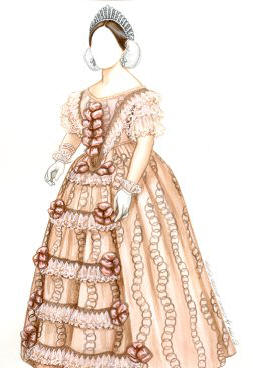
    Victoria leaned on her stylist named Marianne Skerrett. Skerrett was her head dresser from the moment Victoria became Queen until 1862. She made sure of Victoria’s gloves, shoes, hats, and undergarments. Vintage Connection says “The styles of the late 1830s, consisting of a close-fitting bodice, natural waist, and bell-shaped skirt, were particularly becoming to the 4’11” queen. Her lack of height and a tendency toward plumpness made her look best in simple well-tailored clothes such as riding habits.” Puffy sleeves, and puffy skirt along with a small, tiny waist (or boning for the corset) gave off a lady-like figure for the small queen. In earlier days, wide skirts were supported by fabrics like linen which used horsehair in the weave. She also let it be known that all of her dresses are British made only.

    Visit to France
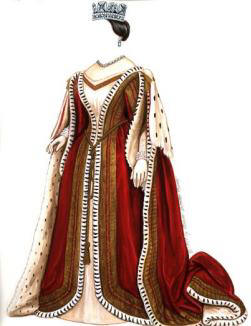
    Queen Victoria: Coronation Dress
    Horse Riding

    Thus, in turn, invited a new style across the world even to the United States with a western style with a little less flair. During the Victorian Era of fashion, this was a time to show the new beginnings of the female since there was a Queen on the throne. Also this meant the difference of money. Whoever had the nicests dresses, meant that the women were from a rich family, or from royalty; in which the women did not have to work. Women of the working class would have their dresses less flair and color. If you think about it, women’s embodiment was in its early phases and sprining into action of the capabilites of the new dress reform.

    The dresses may have been very pretty, but weren’t very comfortable. It was hard to try to get the smallest waist due to the corset to try and look their best and suitable for royalty and society. Their sleeves became lower which gave a little more difficulty raising their arms. Over the course of Victoria’s reign, the style started to come a little less restricted with their corsets and wide dresses, to longer, no corset, but comfortable fitting dresses. Queen Victoria was able to utilize her short frame and less widened shoulders to change the look and fashion of dresses. She was a young Queen in 1837, but she wanted to give a new look for the ages.

    References:

  • Who Was Queen Elizabeth I’s Painter?

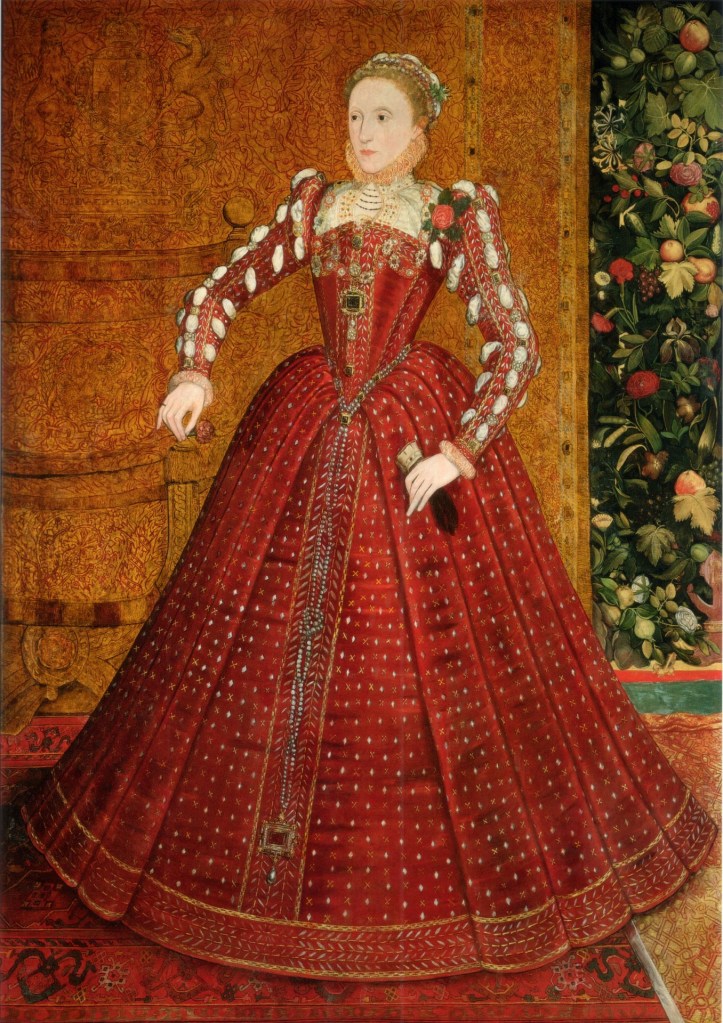
    Elizabeth I ruled during the vibrant Renaissance era, a time overflowing with music, dance, artistic brilliance, and cultural innovation. Among the many talented artists who flourished within the English court was the remarkable painter Levina Teerlinc, whose work helped shape the artistic legacy of the age.

    Levina Teerlinc was known as a “miniaturist” painter for the Royal family including Henry VIII, Edward VI, Mary I, and Elizabeth I. She practiced a form of creating smaller paintings; a style made for lockets, pendants, and necklaces. According to My Daily Does of Art, “Teerlinc is credited with inventing the oval shape for the miniature portrait. Prior to the oval shape, these tiny portraits came only in rectangular shapes.”

    View Source

     Levina was not the only painter allowed at court. A man named Nicholas Hillard practiced the miniaturist painting style as well. “His earliest known attempts at miniature painting were made in 1560, and his talent is obvious in Self Portrait Aged 13 and Edward Seymour, Duke of Somerset. Hilliard became miniature painter to Queen Elizabeth I about 1570 and made many portraits of her and of the leading members of her court.” – Britannica

    There are plenty other artists that painted for the Elizabeth I including George Gower, Robert Peake The Elder, Quentin Metsys, Steven Van der Muelen, and William Segar. Teerlinc was also allowed as privy council under Elizabeth I, gained a starting salary of 40 pounds ($ 55 in USD), and her paintings were considered ““a Carde with the Queen’s Matie [Majesty] and many other personages” – Being Bess. Although she did not sign her paintings, she is signified as one of the best painters for the Tudor family, and some of her work is sometimes hard to recognize in this present day from the other painters.

    References;

  • Yes to the Dress: Queen Victoria’s Dress On Her Wedding Day

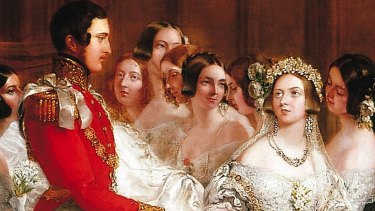
    On this day, February 10, of 1840 the Royal Marriage has been arranged for Queen Victoria Of England, and the love of her life Prince Albert of Saxe-Coburg and Gotha. “We must imagine that her personal happiness must have been so great in anticipation, that she had little time to describe what she wore. We know that she awoke in Buckingham Palace on the morning of 10 February 1840. A watercolour by the artist James Roberts gives us a glimpse of the room, some eight years later. She got up at ¼ to 9 and breakfasted three-quarters of an hour later. The Queen seems to have been more interested in writing a note to her bridegroom, which she wrote as cold rain splashed against the windowpanes. It is tempting to suspect that the Queen was simply impatient and anxious to get to St James’s Palace, to be married to Prince Albert, with whom she was so passionately in love.” –The Royal Central. Although it was a delightful view of their moment of marriage, the preparations and the choice of dress might have been a little bit interesting during that time.

    The designer of the lace was a man named William Dyce from The Royal College of Art, and the maker of the dress was Mary Bettans in Spitalfields (you know, the place where she decided to have her dresses made there for her ball? That place). Together they created a beautiful silk satin white lace and dress for the ages.

    According to the Fashion History TImeline, this dress was “structured, eight-piece bodice features a wide, open neckline. The off-the-shoulder sleeves are short and puffed. The pointed waistline is deep v-shaped, resembling the basque shape. Both the neckline and sleeves were trimmed with lace. The floor-length skirt was very full, containing seven widths of fabric in forward-facing pleats.”

    This dress was also in the color of white. Normally, a royal wedding dress would consist of robes, jewels, and a crown just to name a few things, and the color white (and black) represented the colors of mourning. But Victoria chose white to match the lace of her dress. She also suggested that only her and her bridesmaides wear white dresses as well.

    Ever since the beautiful wedding, Queen Victoria has created a trend of white dresses along with the bridesmaids! Interesting right!? It wasn’t until the modern age of 1950s that dresses counted as a symbol of purity, virginity, and innocence. Today, in days of post-modern era, white is still apart of the beautiful day of marriage, but other colors are now the say so of the bride. I have seen a peacock wedding with those amazing blue and green colors, as well as purple, pink, and even black! The Victorian Era brought out the boldness of fashion, uniquieness, and individualism.

    References:

  • Elizabeth II

    (r. 1952-2022)

    Queen Elizabeth II or Elizabeth Alexandra Mary Mountbatten-Windsor was Queen Of Great Britain ever since 1952, when her father King George VI died. She is what I consider the Queen of the Modern Era.

    Elizabeth II reigned for 70 years, honoring her the Diamond Jubilee, and the year 2022 will mark the year as the Platinum Jubilee for holding her reign for 70 years; in which was given a 4 day celebration.

    With all the queens before her having power with politics, governance decreased over time once Elizabeth became queen. Quiet, yet keenly intelligent, Elizabeth II made sure that her duties as Queen remained in high reputation to the Commonwealth, as well as her fans all across the world.

    Queen Elizabeth died on September 8th, 2022 in Balmoral Castle. She was visited by her children and grandchildren at the time of her death. She will forever be remembered as the Queen of our lifetime.