Category: Monarchy

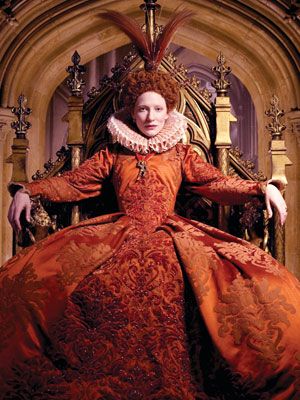
  • There are 2 remarkable movies that reflect the mind and heart of Queen Elizabeth: “Elizabeth” and “Elizabeth – The Golden Age” These movies portray a strong, and observant woman who is proud of her country, but also dealt with many trust issues at court during her reign. I feel that I finally get to see what Queen Elizabeth’s personality could’ve been like during the Tudor-Era.

    Disclaimer: There are some spoilers in this article so I’d recommend you watch both first. Both movies are available on Amazon Prime Video  and free with ads.

    Elizabeth

    Personality

    We’ve read the stories, watched the documentaries, but my inclination was about her personality, how she spoke, her tone and demeanor. Actress Cate Blanchett helped me see an aggressive, passionate, yet young and fearful woman who’s full devotion was to her reign and rule of England.

    In the beginning, the young Elizabeth was strong willed, yet still wanted to come to an understanding of her role. She was constantly persecuted for her beliefs being protestant, but never converted to Catholicism like her half-sister Queen Mary. The majority of the countries Queen Elizabeth had to deal with like Spain, France, and Scotland were Catholic, but the Queen stood her ground.

    Leadership

    Elizabeth I was raised by her mother Anne Boleyn, but watched and observed the roles and duties of her Father King Henry VIII and his councilman. She understood the power that her father had, and carried that knowledge with her to the Throne. She was cunning, incredibly smart, and forgiving to many of those closest to her. Cate Blanchett showed a very shy side of the Queen when dealing with her council. Mainly due to her being a woman as head of state, head of country. The council was small, unlike what England has today: A Prime Minister and Parliament (Like United States, A President and US Congress). During this time, decisions were able to be made at the table instead of waiting until a certain date for the law to potentially be passed. As she grew into her role in the second film, her words were firm and powerful…leading to every woman wanting to be her, and every man wanting to be with her.

    Romance

    Elizabeth felt that she could turn to her one and only true friend and companion,  Lord Robert Dudley. Robert Dudley was later brought on to the privy council, but suffered a bad parental reputation due to his father unable to prevent Mary I to accession. However, Dudley was able to move up in ranking and was becoming the Queen’s favorite. In the first movie we see Dudley and Elizabeth before she was Queen that he would spend time with her and praise her very much, but she later discovers that he was married and that fueled her anger that she decided to never marry and Cate stated the famous quote “I am married to England”. For factual sake, the Queen’s decision to not marry is unclear, but she did want a Mistress than a Master, and was named “The Virgin Queen”.

    The second movie, you see Elizabeth well into her role as Queen, and many suitors are still looking to marry her, however, Cate provides the viewers a glimpse of her wise, powerful mindset of Queendom. She meets a pirate and is enamoured with this stories of the sea. However, he falls for the woman closest to her…her Mistress Beth, which gave the insight and finalization that the Queen remained unmarried.

    Enemies

    Nothing can be more clearer than the multiple enemies Queen Elizabeth had during her reign. Everyone wanted her throne, including her cousin Mary Queen of Scots. Mary was born and raised a Catholic and was destined to take the throne once she became of age. She was also set to marry Elizabeth’s half brother but passed King Edward VI. In the second film, you can see the Queen Of Scots locked away under Elizabeth’s supervision. Their storyline rivalry was not much shown in both movies, but in the first one, the Duke Of Norfolk was beheaded for treason because of his plot to marry The Queen Of Scots, and overthrow the crown of the English Queen. In the end, Queen Mary was beaded as well for treason, her title as Queen has been long gone, and Elizabeth remains victorious.

    I think Cate Blanchett did a great job in both of these movies. It seems as though she enjoyed playing the role, but she definitely brought Queen Elizabeth I into what some think her life would’ve been like.

    If you just spoiled yourself, I still suggest you watch them!

  • From the her Majesty The Queen to a Lady, titles have been with the British, Irish, and Scottish nobles for centuries; but what are the titles for and who deserves them? Also, why do titles appear to come off as confusing and/or misunderstood? I’m here to provide you with a full break down of titles with their roles and duties (whichever one you are interested in, you can scroll down until you find it) :)

    King & Queen

    I thought it would be best to start from the highest (and most familiar) Title and that is the King and Queen. There is only one type of King, but two types of Queens:

    The role of the King or Sovreign is considered as the leader and ruler of the people or country. There was a time when the Monarchy had power over politics of the country, but after the Magna Carta of 1215, the sovreign must have legal descisions approved by council or what we call today, a parliment. The King is a symbolism of the head of state. The Head of Government however, is the Prime Minister.

    Queen Regnant

    Queen Consort

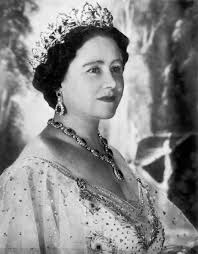
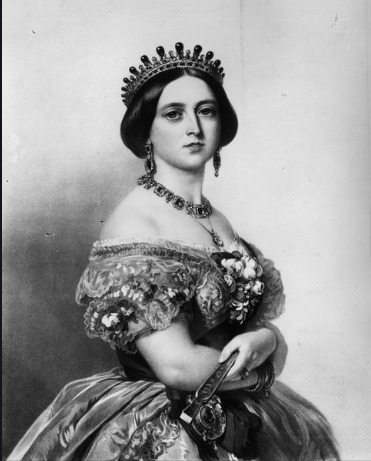
    As noted earlier, there are 2 different types of Queens (well, actually 4, but I’ll get to that part in a moment, and why I said 2). To your left, you see Victoria as Queen Regnant, meaning she is the queen in her right as deserving by blood line. Women were never absent from the role of taking the throne, but since religion and family played a big factor during these times, it was intended and hoped for men to take the throne. To your right, to see Queen Elizabeth The Queen Mother (Queen Elizabeth II’s mother) as Queen Consort, meaning she was married to a King. If the King dies before the Queen Consort, then she is considered as Queen Dowager. In this particular instance, Elizabeth has witnessed her husband die, and her daughter Elizabeth II to become queen, which also gives her the name as Queen Mother (see how that works?)

    Duke & Duchess

    Now you might think that I would have put Prince & Princess next here, but….let me explain. The Duke is the highest in ranking next to the King or Queen, whichever is on the throne. This title can be earned by the King or Queen. There is another Title named Grand Duke or Arch Duke before the title Duke, but here we’re only referring to Duke. A Duchess is a woman who is married to a Duke for her to earn her title. Remember, since the roles in the Medival stages (when Dukedom started, 1337) honored the man, A Duke cannot earn a title by marrying a woman that was already a Duchess. Dukedom does not have to be an inhereted title.

    Prince & Princess

    Prince Albert of Sax-Coburg

    A Prince is an inhereted title from whomever is on the throne by blood. Usually, it is the next in line to the throne if they are the first born; but it wasn’t until the Perth Agreement in 2015, allowed the next sibling (whether male or female) to become next in line of succession (if the first born does not have chidren). Here, you can see Prince Albert was already a Prince, but once he married Queen Victoria, he became Prince Consort. You may ask yourself “Well why wasn’t he a King Consort if he married a Queen?” Victoria wanted her husband to become King Consort, but her council would not allow him because of where he was from (Germany). There are some perks however; if a Prince marries a queen, he has a higher ranking than his children (Hence Prince Philip, Duke of Edinburgh). But if he is not around his wife, then his children rank higher than he does. The Duke and the Prince rankings somewhat intertwine with each other, depending on who their around. A Princess is also an inhereted title from either the King or Queen of royal blood. Her ranking also applies the same as a duchess. A princess can marry, but her husband will not become a prince. Another ranking for a princess is a Princess Royal, which is the first born girl of the royal family.

    Victoria, Princess Royal. Oldest and 1st born girl of Queen Victoria and Prince Albert

    Marquess & Marchioness

    These two titles may have not really been talked about, but that is why you’re reading this now! The Ranking of the Marquess (Mark-Key) is lower than a Duke, and their role was to protect the Monarchy of any potential enemies throughout the United Kingdom. A Marchioness (Mar-Shuness) is a woman or a widow of a Marquess earning her right to this particular title. She too is a ranking below a duchess.

    Earl & Countess

    An Earl held the title with more control over land and finances. They are the ones who keep track of any debts and taxes that needs to be collected if they had land being used for tenants. This title can be earned by King or Queen, and by inheretence. A Countess or Lady is a title by marriage to an Earl. She would have to earn this title by marriage (I hope you are noticing the pattern on how the women earn their titles!) Also, if the father is a Duke, the titles descends from there (Duke, Marquess, Earl, Viscount, Baron, etc.), until the father passes, then the older son becomes a duke.

    Viscount & Viscountess

    For A Viscount, you would consider their role as a Lietenant or deputies in in control of delegations. This title is normally earned by inheritence his father is a Duke or even a King. A Viscountess of course is married or is a widow to a Viscount. She has earned her right as such, and is Also called a Lady.

    Baron & Baroness

    This may be one of rankings towards the bottom, but still has significant roles. A Baron is what you would call “loyalty for land”. This means that he pledges loyalty to the throne and in return is given land that he can pass down to his children. A Baroness Title is earned once married, but is very responsible within her Barony. In Government today, there are Baroness’ joined together with the Barons under The House Of Lords. 

    Knight & Dame 

    A Knight is there to protect the lands of the monarchy as a warrior and able to withstand long days at war. A Dame is the wife of the Knight, or a member of knighthood.

    Esquire

    An Esquire is responsible for the land of the Knight, but not yet a Knight himself. Today it is more used at the end, or no significance at all. Others use it if they’re practicing Law. However, if you want to know the best social status? Esquires.

    Lord & Lady

    This is the lowest ranking throughout nobility, but just as familiar as the King & Queen (interesting right?) In the Medieval days, a Lord or Gentlemen obtains the role of all the land that surrounds him. Owned a high responsibility. Today this role is established under Government through Parliament. A Lady is a woman that not only is married to a Lord, but considered as a personal assistant to Royalty. She is also called a Lady-In-Waiting (Queen of Scots had four of them!).

  • Catherine of Aragon was the first wife of Henry VIII. They produced and heir to the throne named Mary. Catherine faced many difficult birth attempts and had still borns (which could today leave a woman dealing with post-partum depression). However, Henry was deteremined to have a son, therefore he chose to go against the Catholic Priest and wanted to have their marriage annuled and desired another woman named Anne Boelyn. So whatever happened to Catherine after the divorce?

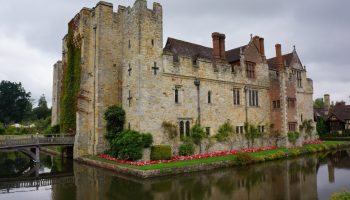
    In a sense, Catherine was booted out of the castle immediately and transferred many times until her and her daughter were placed at Kimbolton Castle.

    Her and her daughter Mary were to live in separate chambers of this castle and was not allowed to see or write letters to each other. Some sources say that there was compassion for the two, and some of the letters were able to be fully exchanged. Later, Henry wanted to offer Catherine a deal: To declare Anne Boelyn as Queen and in return have a better living quarters and able to see her daugther Mary. Both Catherine and Mary refused to accept this offer. Both went from Queen and Princess to ladies. If I would understand their feelings, I would feel betrayed. Catherine refused to return the jewels that are for the Queens, and still called herself the lawfully wedded wife of Henry VIII.

    As Catherine got older, she decided she wanted to write her Will. She wanted her nephew to protect her daughter. Sources say she wrote a last letter to Henry stating:

    My most dear lord, king and husband,

    The hour of my death now drawing on, the tender love I owe you forceth me, my case being such, to commend myself to you, and to put you in remembrance with a few words of the health and safeguard of your soul which you ought to prefer before all worldly matters, and before the care and pampering of your body, for the which you have cast me into many calamities and yourself into many troubles. For my part, I pardon you everything, and I wish to devoutly pray God that He will pardon you also. For the rest, I commend unto you our daughter Mary, beseeching you to be a good father unto her, as I have heretofore desired. I entreat you also, on behalf of my maids, to give them marriage portions, which is not much, they being but three. For all my other servants I solicit the wages due them, and a year more, lest they be unprovided for. Lastly, I make this vow, that mine eyes desire you above all things.
    Katharine the Quene.

    On January 7th of 1536, Catherine of Aragon died at the age of 50 In Kimbolton Castle.

    References:

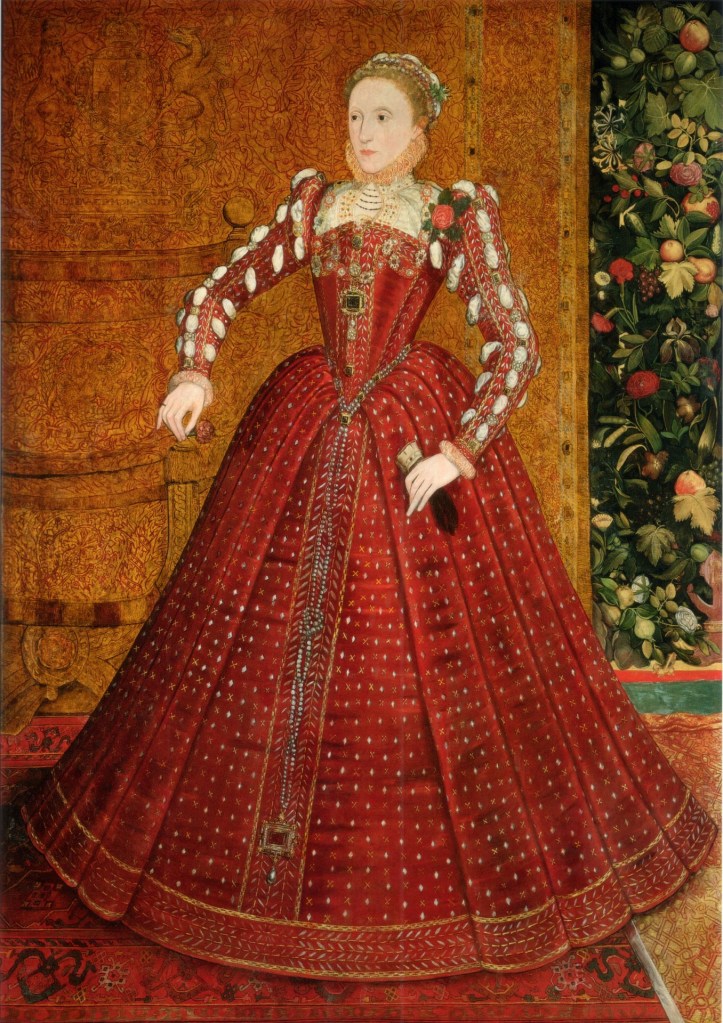
  • Queen Elizabeth I held her reign during the Renaissance Era; full of music, dancing, creativity, and art. With art, the English court had a mulititude of creative painters, one who’s name was Levina Teerlinc.

    Levina Teerlinc was known as a “miniaturist” painter for the Royal family including Henry VIII, Edward VI, Mary I, and Elizabeth I (basically the Tudor Family).. She practiced a form of creating smaller paintings; a style made for lockets, pendants, and necklaces. According to My Daily Does of Art, “Teerlinc is credited with inventing the oval shape for the miniature portrait. Prior to the oval shape, these tiny portraits came only in rectangular shapes.”

     Levina was not the only painter allowed at court. A man named Nicholas Hillard practiced the miniaturist painting style as well. “His earliest known attempts at miniature painting were made in 1560, and his talent is obvious in Self Portrait Aged 13 and Edward Seymour, Duke of Somerset. Hilliard became miniature painter to Queen Elizabeth I about 1570 and made many portraits of her and of the leading members of her court.” – Britannica

    There are plenty other artists that painted for the Elizabeth I including George Gower, Robert Peake The Elder, Quentin Metsys, Steven Van der Muelen, and William Segar. Teerlinc was also allowed as privy council under Elizabeth I, gained a starting salary of 40 pounds ($ 55 in USD), and her paintings were considered ““a Carde with the Queen’s Matie [Majesty] and many other personages” – Being Bess. Although she did not sign her paintings, she is signified as one of the best painters for the Tudor family, and some of her work is sometimes hard to recognize in this present day from the other painters.

    References;

  • (r. 1542-1567)

    Mary, Queen Of Scots or Mary Stuart became Queen Of Scotland when she was an only 6 days old after her father died. Mary is also the cousin of Queen Elizabeth I by being King Henry VII’s great-granddaughter. However, due to differences in religion between Mary and Elizabeth, there was always conflict for the battle of the English Throne.

    Mary held her reign over Scotland for 25 years. Charming, yet naive, Mary’s reign was cut short after getting caught in a plot to assassinate Elizabeth I. Losing her title as Queen in 1567 and imprisoned for 19 years, she was executed in 1587 for Treason at the age of 44.

  • (r. 1837-1901)

    Queen Victoria held her reign as Queen of England from at a young age of 18 from 1837 until she was 81 years old in 1901. She was next in the line of succession after her uncle, King William IV, (who lived longer than her father Prince Edward). She was the only child of Prince Edward which gave her next in line to the throne.

    Victoria realized she was going to be queen one day in her adolecent years. However, she was guarded and supervised to the point where she became very liberated when she became queen at the age of 18. She no longer wanted or felt the need for supervision, and wanted to do things her way. Throughout her reign she was loved by her people, and she cared very much of what her peopled wanted and expected of her. She held her reign for 63 years and earned the Diamond Jubilee for holding her reign the longest (before Elizabeth II).