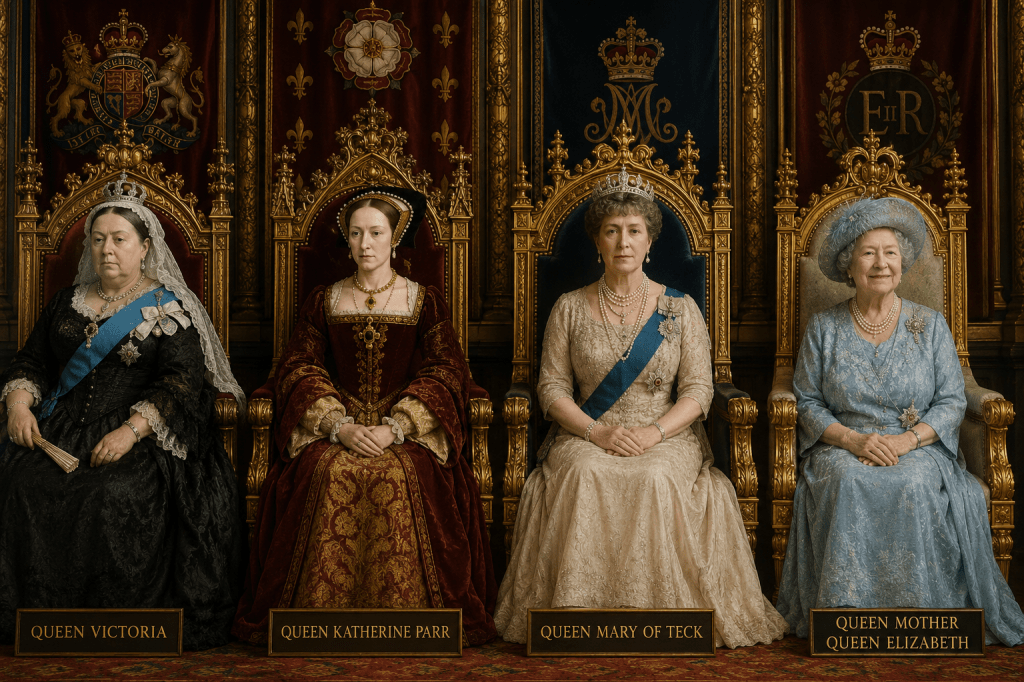
After doing research and understanding the roles and responsibilities behind a Queen, I’ve come to notice that she has separated roles solely based off of her title. So when it comes to their roles, I have found 4 different types of Queens: Queen Regnant, Queen Consort, Queen Mother, and Queen Dowager. There are some similarities but major differences. Let’s take a look into the dynamics of Queen titles and duties.
A lot of historians can find this awareness rather “old news”. Others, may just be getting started in their historical journey to find out who is who, and I’m here to share it.
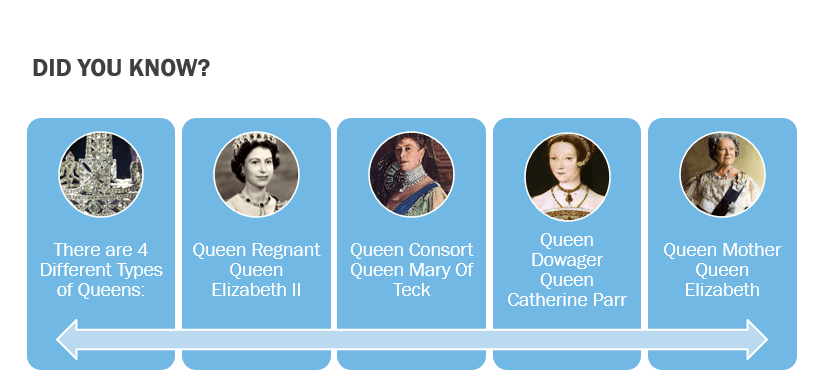
Queen Regnant
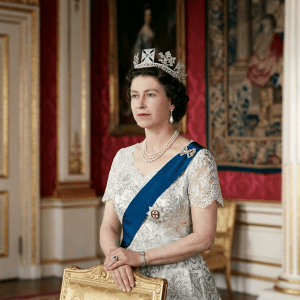
Let’s start off with whom I feel is the most prominent, carrying the most responsibilities of them all. The Head of State, The Heir, the Queen Regnant. From the picture above I have our most recent Queen, Queen Elizabeth II for example. A Queen Regnant is the one who is next in line or heir to the throne. For her story, Queen Elizabeth II was next in line to the throne after her father King George VI. Originally her uncle, King Edward VIII was set to be King, but did not make it to his Coronation due to marrying Wallis Simpson. Ms. Simpson a women that was twice divorced (which was a big no-no back then)! Since he had no children or heirs, Edward VIII served from January of 1936 and abdicated the throne in December of 1936. His brother George was next in line to be King and served from 1936 to 1952. King George VI died due to coronary thrombosis.
From 1952 to 2022 is Queen Elizabeth II, serving and outstanding 70 years as Monarch, making her the longest serving monarch in history! Just like the Queen’s before her, such as Queen Victoria who served 63 years, and Queen Elizabeth I who served 42 years, Elizabeth II has it in her bloodline and within her right to carry the torch as Queen Regnant. The chances of a Queen to rule by bloodline does not come as often as a King. Ironically, it is a Queen who has reigned the longest.
Duties & Responsibilities
- DUTY: It is the duty of the Queen to represent and become an important symbol of her country during her reign. She must uphold the highest standards for services towards her community, give awards, and have an important role in philanthropy.
Once a former King or Queen passes, instantly comes the servitude of the next Monarch by Coronation ceremony. It is the official initiation of a Queen with promises to serve their country, have their anointing, as well as abide by laws. Annually, the Queen attends the Opening of Parliament. This ceremony introduces a new year for the Sovereign, House of Lords, and the House of Commons. Another annual ceremonial service is the Trooping the Colour, or a parade for the Monarch. This display is gathered in front of thousands of their loyal subjects; with the Queen on her horse, supported with military troops, and ending off with an exciting fly over performance by the Air Force.
- RESPONSIBILITY: As Queen Regnant, having the highest role, will come with responsibilities. Having this role takes on not only the crown, but a position that has been passed down from generation, to generation. Their duties are as “Head of State”. This level of hierarchy gives the opportunity for the monarch to advise, guide, and give encouragement to government. However, being the Head Of State, a Queen does not bow towards an opinion when it comes to government. Nor is she above the law. This decision was made long ago back in 1215: “The Magna Carta”.
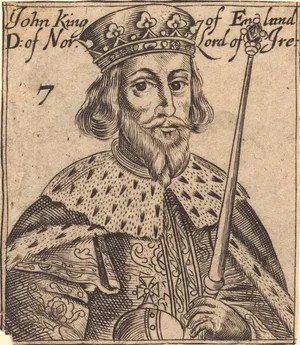
This principle came into action after King John of England in 1215, stating that:
“the king and his government was not above the law. It sought to prevent the king from exploiting his power, and placed limits of royal authority by establishing law as a power in itself.”
This chartered documentation include key factors such as Rule of Law, Due Process, Limitations on Taxation, and Foundational Impact. It was a system to give fairness to the barons and nobles.
After the act of the Magna Carta, follows the Bill of Rights and the Claim of Right Act in 1689, and the Act of Settlement in 1701. These forms of legislation restricted full power to the monarch from abuses of power. Let’s face it, having this type of power can cause destruction. Having a parliament is better than to leaving it in the hands of one person.
Queen Consort
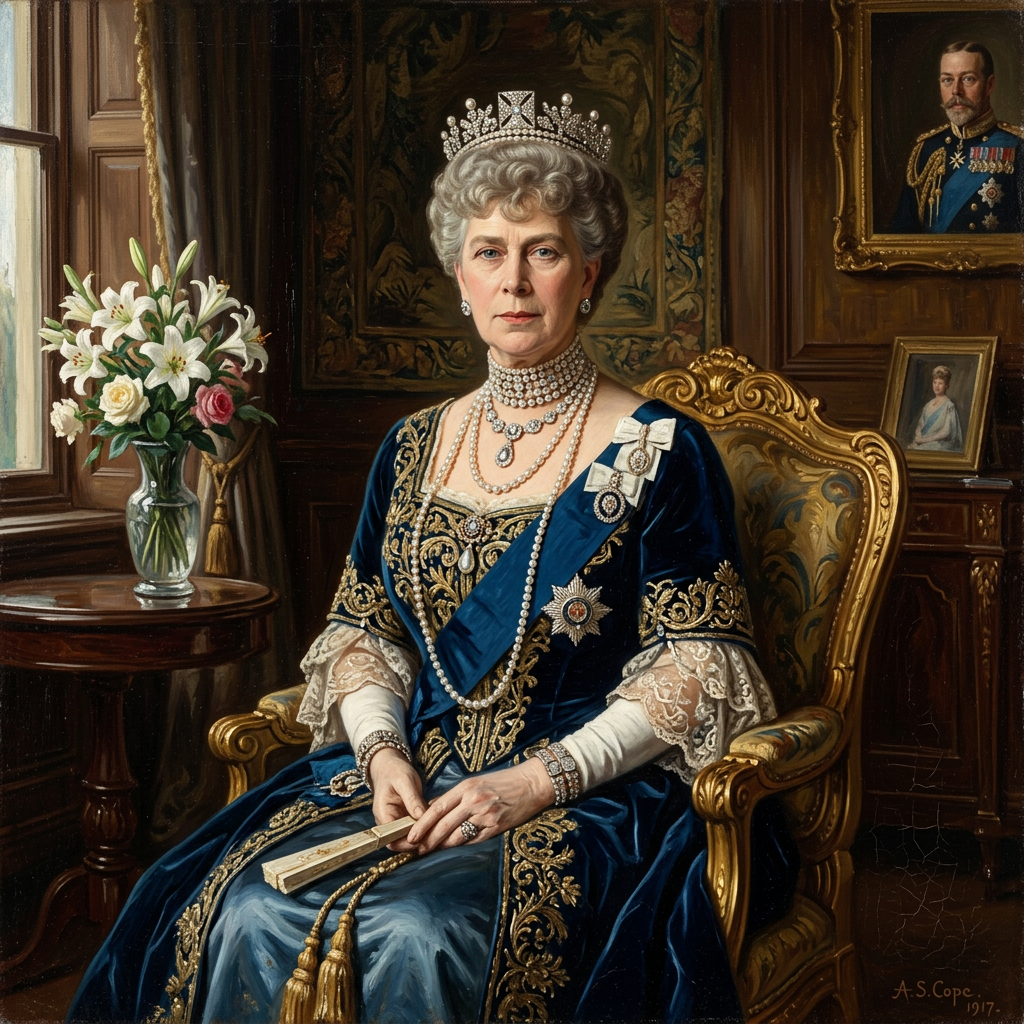
Now the Queen Consort is just as important as the Queen Regnant, but not so much in responsibilities. She too is also apart of the Monarchy along side of her husband the King. A Queen Consort is someone who is married into the Royal Family and also given a coronation with the King. Throughout history it was an arranged marriage from another country to carry power and prestige. From the example above I chose Queen Mary of Teck. She is in fact the grandmother of Queen Elizabeth II, and was wife to King George V. Her father Francis, Duke was Teck was born in Esseg, Slavonia, which he is of Croatian descent. The relationship was rather common to obtain, since Mary’s mother Mary Adelaide of Cambridge was the first cousin to Queen Victoria.
Duties & Responsibilities
- DUTY: Queen Consorts carry the duty of being the companion of the King. Her assistance is to help in ceremonial events, as well as having to support the children in education, and staff management. She too has public appearances with the King, and philanthropic activities she attends. Having heirs gives the Queen Consort a rise in not only prestige, but respect. She is signified as a healthy Queen, who is standing by the side of her husband, and supports him in every way.
- RESPONSIBILITY: The duty of a Queen Consort is more important reputation to have than responsibility. For she has a little to no responsibility as Consort. Only her husband has power and responsibility over the country. But dressing up and attending ceremonies would make her job a little easier, wouldn’t you think?
Queen Mother
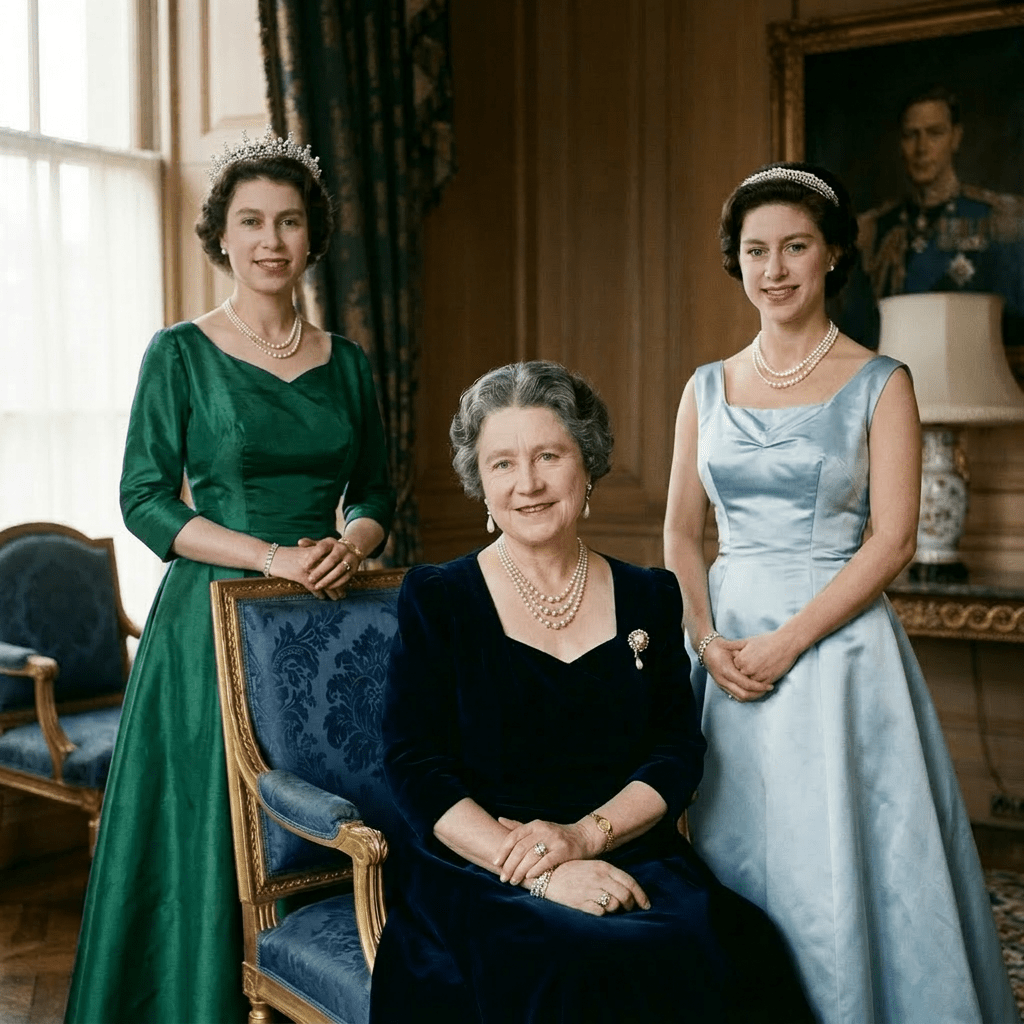
I would say I had a little bit of overthinking with this position of when and where to place the Queen Mother, or the Queen Dowager, for they are relatively the same, but still have their differences. A Queen Mother, is a women who was married to a King as Queen Consort, but once the King passes and she is the mother to the heir (very important) she then becomes the Queen Mother. The perfect example is Queen Elizabeth II’s mother Elizabeth Bowes-Lyon. She was the wife of King George VI, and mother to Elizabeth and Margaret.
Duties & Responsibilities
- DUTY: As the Queen Mother, it is her role to perform official visits, holding patronages for hundreds of organizations, providing stability, and sustaining the monarchy’s public image. She is the one that guides the Monarch within the compass of the realm.
- RESPONSIBILITY: The Queen Mother participates in charity works, patronages, public engagements, and many other respectable honors in part of the Royal Family.
Queen Dowager
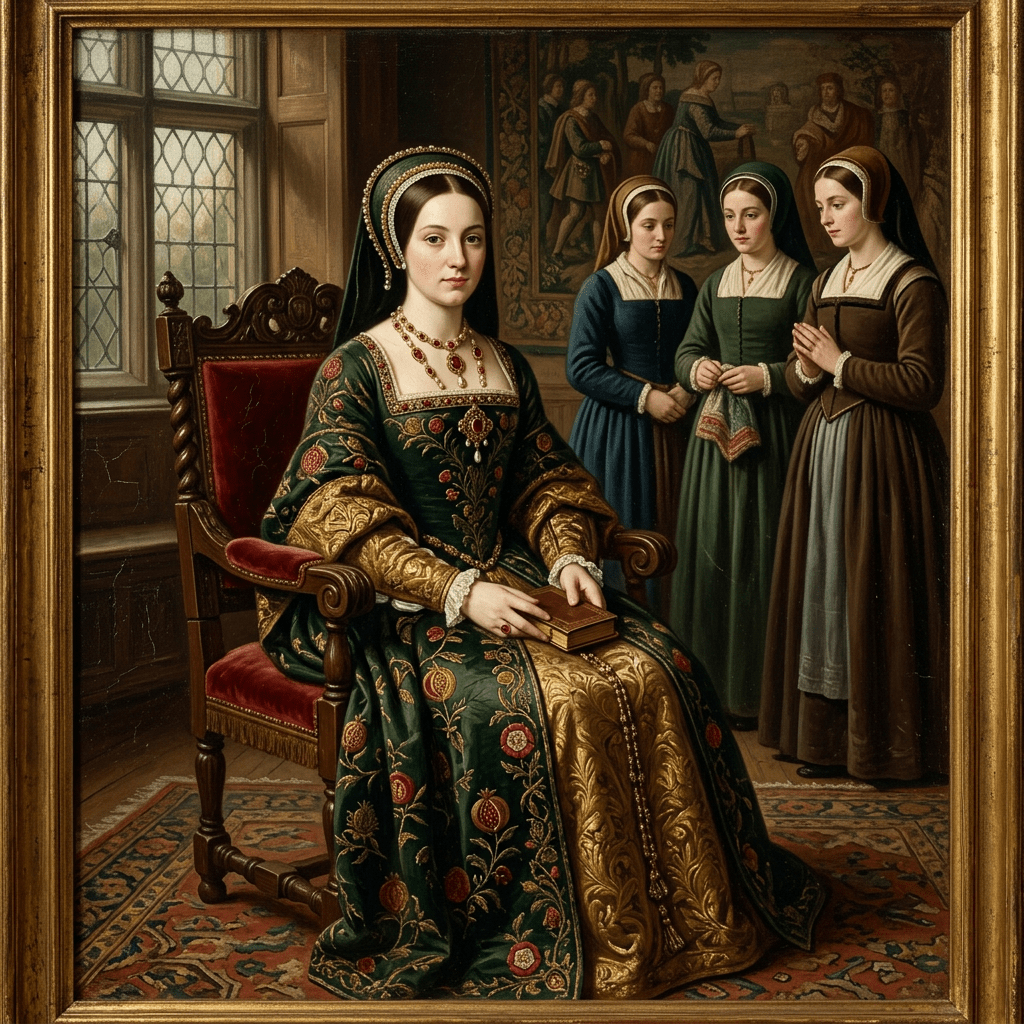
Being a Queen Dowager is one who is the wife of the King, but the King has died, but the wife does not have her own child as heir. Catherine Parr, known as the 6th and last wife whom ‘survived’ from many of King Henry VIII’s marriages. After the King died, Queen Catherine still had her title, but his oldest daughter Mary, became Queen, and the first Queen by blood (or Regnant) of England and Ireland, and Spain. The dynamics of rank drastically changed once Mary became Queen, as Catherine Parr’s responsibilities were fully reduced, given 7,000 euro as Dowager and into retirement.
Duties & Responsibilities
- DUTY: The Queen Dowager, although is not the mother to the heir, still is active when it comes to supporting the monarch, public duties, and patronages.
- RESPONSIBILITY: If in fact the heir is too young to rule, the Queen Dowager would stand as ‘Regent’, not confusing with “Regnant”. One close example was Queen Mary de Guise, who although was mother of Mary Queen Of Scots, was also a widow of King James V, and became Regent due to Mary beginning the start of her role at 6 days old in 1554.
References:
https://www.nationalarchives.gov.uk/education/resources/magna-carta/british-library-magna-carta-1215-runnymede/
https://www.britroyals.com/windsor.asp?id=mary_teck
https://www.royal.uk/encyclopedia/queen-elizabeth-the-queen-mother#:~:text=After%20the%20King’s%20death%2C%20The,President%20of%20some%20350%20organisations.
